Suche

Suchergebnisse

Total results: 127.

Lineare Algebra III - Teil A

Diese digitale Veröffentlichung beinhaltet das Vorlesungsskript zu einem Kurs, den Egbert Brieskorn in den 1980er Jahren an der Universität Bonn gehalten hat. Das zentrale Thema dieses Bandes ist die Euklidische Geometrie.

Was hebt die Buchreihe von Herrn Brieskorn ab von anderen Büchern zur Linearen Algebra? Da gibt es vieles zu erwähnen, wovon hier exemplarisch genannt seien:
  • Die Motivationen der Inhalte und Art der Visualisierungen, welche ansonsten undurchschaubare Sachverhalte und Gebilde oft verständlich darzulegen vermögen.
  • Durchgängige Konzepte und Bezüge über alle Bände hinweg.
  • Die Präsentation der Inhalte: Klassische Ergebnisse werden sowohl vom historischen Ursprung aus dargestellt als auch von einer modernen Perspektive aus betrachtet; insbesondere in diesem dritten Band.

Teil B der Linearen Algebra III ist hier abrufbar.

Image: 
Contributor(s): 
Egbert Brieskorn
Andreas Beschorner
File(s) with Language: 

File title: 
Brieskorn LAIII-A

File language:

Lineare Algebra III - Teil B

Diese digitale Veröffentlichung beinhaltet den unvollendeten letzten Teil des Vorlesungsskripts zu einem Kurs, den Egbert Brieskorn in den 1980er Jahren an der Universität Bonn gehalten hat, editiert aus seinem Nachlass. Im vorliegenden Skript vereint Brieskorn moderne Präsentationen Linearer Algebra mit Themen der klassischen Geometrie, und das deutlich enger als es damals und wahrsheinlich auch heute üblich war/ist. Die zentralen Themen dieses letzten Bandes sind die Theorie der Polyeder und geometrische Kristallografie. Diese Gebiete werden so präsentiert, dass eine Brücke zwischen den Grundvorlesungen der Linearen Algebra und Spezialvorlesungen zu Vertiefungsthemen der Mathematik und ihren Anwendungen geschlagen wird.

Teil A der Linearen Algebra III ist hier abrufbar.

Image: 
Contributor(s): 
Egbert Brieskorn
Erhard Scholz
File(s) with Language: 
File title: 
Brieskorn LAIII-B

File language:

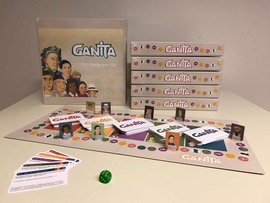
GANITA

Beschreibung

Description: 

Ganita ist ein Lernspiel in Brettform, das für Schüler*innen des Gymnasiums ab etwa der 6. Klasse geeignet ist. Natürlich kann es auch mit Familie und Freunden zu Hause gespielt werden. Während sich die Schüler*innen mit ihren Spielfiguren auf dem Spielfeld bewegen, müssen sie Aufgaben aus fünf verschiedenen Kategorien lösen, die den Bildungsplan Baden-Württembergs (2016) sowie Probleme aus der außerschulischen mathematischen Welt abdecken. Die verschiedenen Kategorien versuchen unterschiedliche Aspekte zu berücksichtigen, um die Schüler*innen zu unterstützen. So soll Ganita die Spieler*innen durch die physische Komponente des Spiels und die Embodiment-Zugänge tiefgehend aktivieren und motivieren. Die Aufgaben haben zum Ziel, Wissen zu festigen und zu wiederholen und die Schüler*innen dazu zu animieren, ihr Wissen in unterschiedlichen Kontexten anzuwenden. Dadurch soll es den Schüler*innen ermöglicht werden, die Relevanz von Mathematik in unserer Welt zu erkennen. Eine erste, in Ansätzen empirische Untersuchung weist darauf hin, dass die Problemstellungen ebenfalls die Kreativität beim Lösen von Problemen steigern und die mathematischen Überzeugungen der Schüler*innen beeinflussen. Ebenso gibt es Hinweise darauf, dass die Spielmechanismen die Zusammenarbeit zwischen den Schüler*innen fördern und dabei helfen, sie intrinsisch zu motivieren.

Diese Version des Spiels ist auf Deutsch, Übersetzungen in andere Sprachen sind geplant.
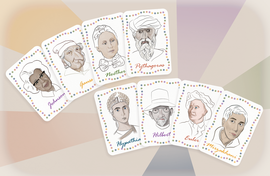
Hinweise für Übersetzer*innen: Wir freuen uns über Übersetzungen des Spiels in jegliche Sprachen. Gerne dürfen auch neue Mathematiker*innen als Spielfiguren hinzugefügt sowie deren Biographien im Lexikon ergänzt werden.

Falls man auf das Selbstausdrucken und Basteln verzichten möchte, kann Ganita über Mathe im Leben gekauft werden: https://www.mathe-im-leben.de/ganita.

Kontakt mit Prof. Dr. Carla Cederbaum und Anja Fetzer können Sie unter folgender E-Mail-Adresse aufnehmen: ganita@math.uni-tuebingen.de

Aufgrund der aktuellen Lage haben wir eine Online-Version erstellt, die auch in Zeiten von Corona spielbar ist. Sie ist unter den zusätzlichen Dateien, die zum Download bereitstehen, zu finden.

Criterias

Guidance needed?: 
no

Download

Language:

Recommended Target Group:

Files: 
Title: 
Book for teachers PDF
Title: 
Legal Information Sticker PDF
Title: 
Printing Instructions PDF
Title: 
Online-Version
Title: 
Printing Instructions DOC
Title: 
Cards INDD
File: 
Title: 
Codes PDF
Title: 
Rulebook INDD
File: 
Title: 
Codes DOC
Title: 
Encyclopedia INDD
Title: 
Wissenschaftliche Arbeit
Title: 
Empty Cards
Main File: 
Main File Description: 
Gameboard - Cards - Pieces - Rulebook - Encyclopedia (all texts in German)
Credits Collection: 
Ganita was tested in cooperation with the German Mathematical Society.
Prof. Dr. Carla Cederbaum
Anja Fetzer
Prof. Dr. Carla Cederbaum
Dr. Elke Müller
Prof. Dr. Carla Cederbaum
Anja Fetzer
Lea Lange
Dr. Elke Müller
Prof. Dr. Carla Cederbaum
Dr. Elke Müller
Stephanie Schiemann
Michael Féaux
Olivia Vicanek Martinez
Image Collection: 

Exhibition/User:

Women of Mathematics throughout Europe

Thirteen women mathematicians portrayed in the original exhibition share their experience, thus serving as role models to stimulate young women scientists to trust their own strength. In presenting mathematics through women mathematicians’ perspectives and samples of their life stories, the curators hoped to highlight the human aspects of producing mathematics, making this discipline more tangible and therefore more accessible to outsiders or newcomers.

The format, originally envisaged as a networking opportunity and for which the project was awarded with the Humboldt Alumni Award 2015, has indeed proved to reinforce collaborations and exchanges between mathematicians in different European countries, and stimulate dialogue around the themes of the exhibition between the general public and mathematicians. 

Downloads

You can see individual panels in our online gallery. To download the full exhibition (all panels in high resolution for printing), please make sure you have a sufficient internet connection:

English

Full quality Panels for printing (PDF, 728.5 MB)

Mid quality Panels (JPG, 33.5 MB)

Catalogue (PDF, 4.2 MB)

Full quality Poster for printing (PDF, 16.3 MB)

Mid quality Poster (PDF, 1.9 MB)

Spanish

Full quality Panels for printing (PDF, 611.1 MB)

French

Mid quality Panels (PDF, 48.8 MB)

German

Full quality Panels for printing (PDF, 700.1 MB)

Travelling exhibition 

Following the opening in Berlin 2016, the exhibition has been traveling to more than 80 cities in and out of Europe, including South America, Australia and Africa. Please check details of the venues from 2016-2018 at Women of Maths.

The exhibition has further triggered other similar projects leading to extended versions of the exhibition in various cities (Cambridge, Aachen, Kaiserslautern, Heidelberg and even other continents, in Chile) where further Portraits of Mathematicians (and computer scientists in the case of Heidelberg) where added to the existing panels.

The team 

This exhibition and the catalogue (publishing house: Verlag am Fluss) are the result of the joint efforts of the photographer Noel Tovia Matoff and four mathematicians: Sylvie Paycha, Sara Azzali, Alexandra Antoniouk, Magdalena Georgescu. With the precious help of Maria Hoffmann-Dartevelle, who translated into German and Sara Munday, who proofread the interviews and, last but not least, our two inspired graphic designers Wenke Neunast/eckedesign (exhibition) and Gesine Krüger (catalogue).

The exhibition was made possible on the basis of a project submitted by Alexandra Antoniouk and Sylvie Paycha.

You can download the catalogue or order it in paper form via the publishing house Verlag am Fluss.


Main Image: 
Credit Text: 
The following organizations sponsored the exhibition: Alexander von Humboldt Foundation, Bosch Foundation, Maecenia Frankfurt Foundation, University of Potsdam, Berlin Mathematic School, European Women in Mathematics, TU Berlin, TU Mathematics library, French Embassy in Germany, London Mathematical Society. This project was supported by: 7th European Congress of Mathematics, European Mathematical Society
Image Collection: 
Files: 
Contributor(s): 
Noel Tovia Matoff
Sylvie Paycha and Sara Azzali
Sylvie Paycha and Noel Matoff
Humboldt Alumni Award 2015

Future Mobility - The Board Game

Beschreibung

Description: 

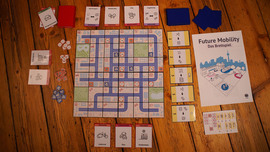
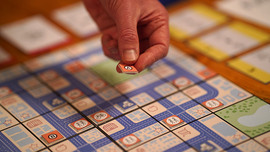
The objective of the game is to be the first to reach 50 points. Points are awarded by completing trips through the city. Trips award more points when they are completed through cleaner or more efficient modes of transportation, or when they are avoided entirely by removing the need to make them. Draw five trip cards from the top of the trip deck and place them face up in front of everyone. Deal each player two power-up cards and select the player who will go first randomly.

In your turn, you first draw a card from the power-up deck. Then you can play any number of power-up cards from your hand. Now, you choose which trip to make by taking one (or more) of the trip cards that are face-up on the table. You then announce your trip to other players, who might choose to play a complication card at this point. You receive points for your trip/s and optional bonus points for using power-ups!

There are power-up cards related to the Avoid, Shift and Improve concepts. With the Avoid cards as work from home, dense city, or delivery you can discard trip cards without making the trips. With the Shift cards, you can permanently improve the city’s infrastructure, and build tram stops, bike or footpaths. Electric vehicles and cargo bikes improve resource efficiency on trips.

Please download the printable files. You will find the game instructions, the game board, the trip and power-up cards, markers, and also a quick reference. The game board consists of 4 parts, each printed on one Din-A4 page. Cut out all the cards and markers and read through the game instructions.

(Notes: The traffic jam markers are placed in the center of any game cell, not on the stars (as shown in the video). The stars are reserved for tram stops, bicycle lanes, and footpaths, a maximum of 2 per cell.) 
 
All files and source files are available at the GitHub repository.

Criterias

Guidance needed?: 
no

Download

Licence:

Files: 
Credits Collection: 
Designed and developed by Eric Londaits for IMAGINARY gGmbH. Translation to German by Elisabeth Schaber, and Andreas Matt. Playtesting by Andreas Matt, Bianca Violet, and Johanna Marschall.
Gefördert von: 
Developed by IMAGINARY for Futurium.
Image Collection: 

Exhibition/User:

School Taskbook: From 5 to 15

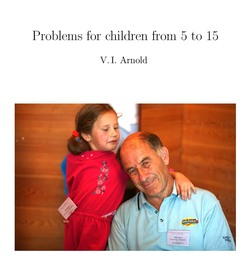
The taskbook for school students by renowned Russian mathematician Prof. Vladimir Igorevich Arnold. You can find the original Russian version as well as an English, German, Spanish, Italian, Vietnamese and Turkish translation.

If you are interested to add a new translation, please see the github repository of the booklet for all sources and details.

Image: 
Contributor(s): 
Vladimir Igorevich Arnold
Victor Goryunov
Sabir Gusein-Zade
File(s) with Language: 
File title: 
Problems for Children from 5 to 15 (English)

File language:

File title: 
Problems for Children from 5 to 15 (Russian)

File language:

File title: 
Problems for Children from 5 to 15 (German)

File language:

File title: 
Problems for Children from 5 to 15 (Spanish)

File language:

File title: 
Problems for Children from 5 to 15 (Vietnamese)

File language:

File title: 
Problems for Children from 5 to 15 (Italian)

File language:

File title: 
Problems for Children from 5 to 15 (Turkish)

File language:

File title: 
Problems for Children from 5 to 15 (Dutch)

File language:

Katzengold: Pyrit, Platon und ein Polynom

Was haben das Mineral Pyrit, der fünfte platonische K̈örper (genannt Dodekaeder) und ein Polynom vom Grad 16 gemeinsam? Dieser Artikel untersucht diesen Zusammenhang mit Hilfe der kostenlosen Software SURFER der Plattform IMAGINARY - open mathematics. Daraus entstehen faszinierende Bilder, die zeigen, wie ein Würfel sich nacheinander in einen Dodekaeder, einen Rhombendodekaeder und einen Oktaeder verwandelt, alles dank einer einzigen Formel. Es wird ein Überblick über die Ideen und die Mathematik hinter diesen Visualisierungen gegeben. In der Tat kann jeder mit Hilfe der SURFER-Software diese Formen in Echtzeit erkunden und selbst verändern. Ferner haben die Autoren einen Kurzfilm erstellt, der die einfache geometrische Scḧönheit dieser Zusammenhänge vor Augen führt.


Image: 
Contributor(s): 
Stephan Klaus and Bianca Violet
Sophia Jahns
File(s) with Language: 
File title: 
Katzengold: Pyrite, Plato, and a Polynomial

File language:
File title: 
Katzengold: Pyrit, Platon und ein Polynom

File language:
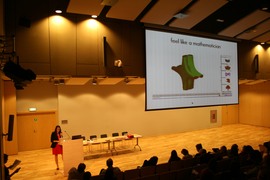
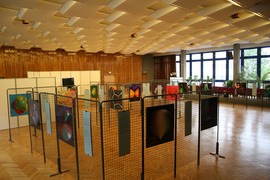
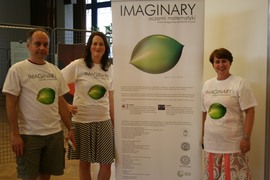
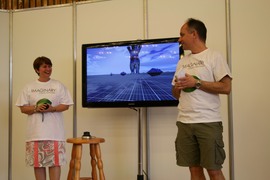
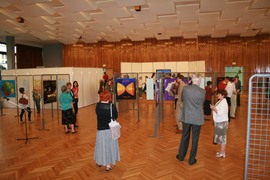
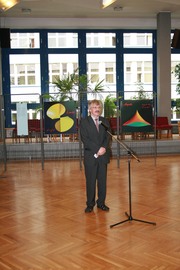
IMAGINARY in Krakau

Time and Place: 
Mittwoch, Juni 1, 2011 - 22:00 bis Samstag, Juni 18, 2011 - 21:45
Venue: 
Faculty of Mathematics
Pedagogical University of Krakow
ul Podchorazych 2
30-084 Krakow
Poland
Coordinates: 
POINT (19.9087301 50.0745327)
Opening Hours: 

Monday to Friday: 10 am – 5 pm

Files: 
Poster of the exhibition in Krakow
Image Collection: 
Credits: 
Pedagogical University of Krakow
Gefördert von: 
German Embassy in Warsaw and the Goethe Institute.

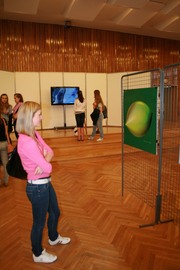
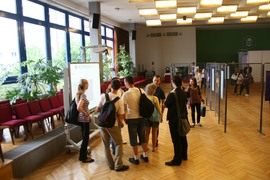
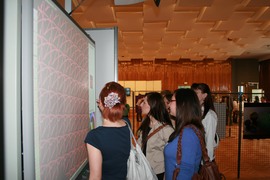
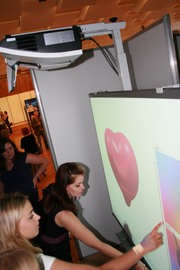
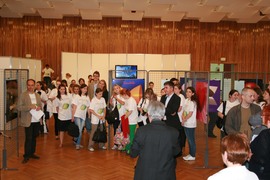
IMAGINARY in Warschau

Time and Place: 
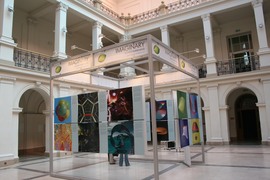
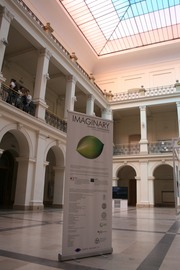
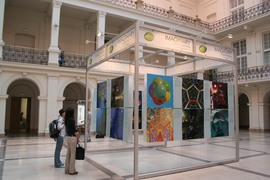
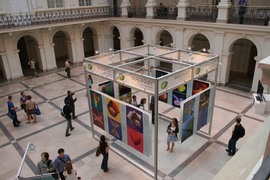
Sonntag, Mai 29, 2011 - 22:00 bis Samstag, Juni 11, 2011 - 21:45
Venue: 
Aula, Faculty of Physics
Warsaw University of Technology
ul Kaszykowa 75
00-662 Warsaw
Poland
Coordinates: 
POINT (21.0080074 52.2223616)
Opening Hours: 

Monday to Friday: 10 am – 5 pm

Files: 
Poster of the exhibition in Warsaw (pdf)
Image Collection: 
Credits: 
Warsaw University of Technology
Gefördert von: 
German Embassy in Warsaw, Goethe Institute

Seiten