찾기

검색 결과

Total results: 127.

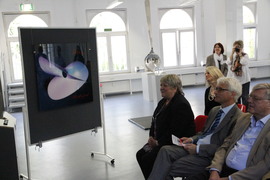
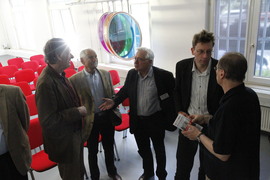
Mathematikon - Grand Opening of the Shopping Center

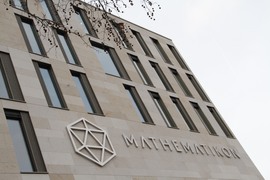
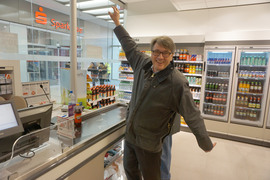
Today, the first mathematical shopping center opens in Heidelberg, Germany. The Mathematikon shops are integrated into the building complex called Mathematikon.

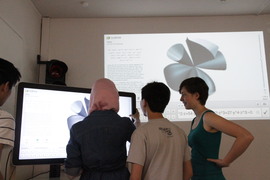
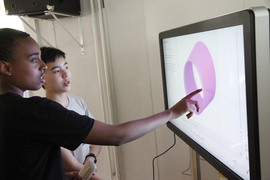
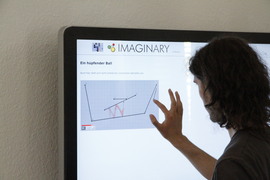
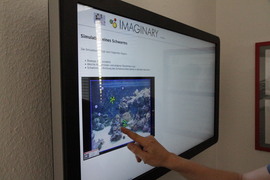
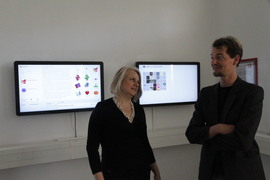
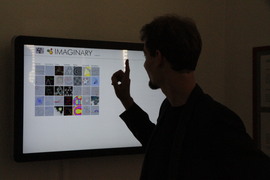
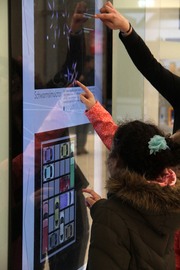
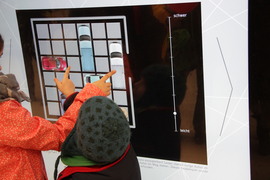
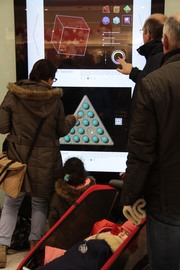
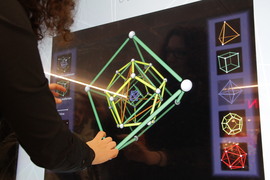
Together with mathematicians from 14 countries, IMAGINARY created the mathematical content and is also responsible for the exhibition design. A highlight is the 84 inch touch screen, which is mounted vertically and offers two different math games at the same time in different heights. It is suitable for all ages and the perfect family attraction. The apps and games are based on the Cinderella applets, known from many IMAGINARY exhibitions.

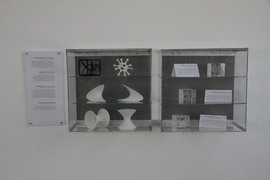
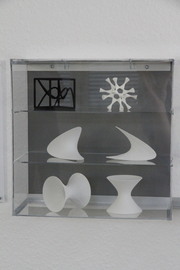
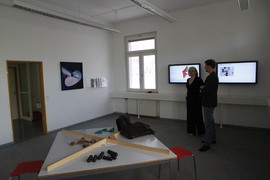
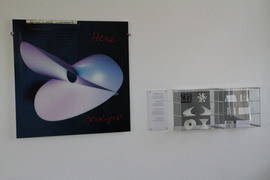
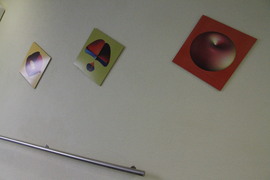
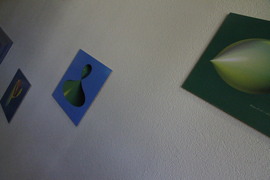
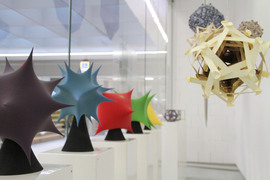
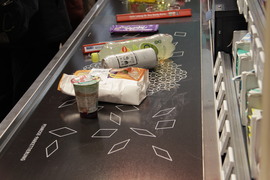
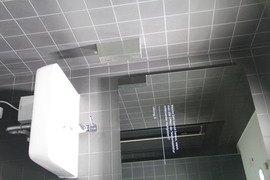
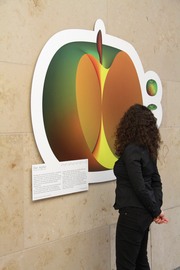
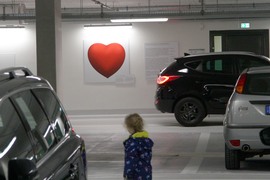
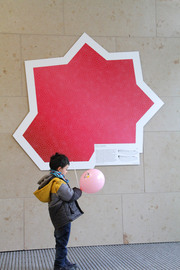
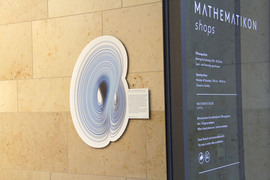
A mathematical image gallery with 13 big format prints and explanations is displayed in the general public area and the parking garage, providing unusual insights into different fields of mathematics. The conveyor belts at the cashiers in the super market invite you to playfully think about classic and modern mathematics. You can experiment yourself using the items you want to buy – juice packages, bottles, oranges, eggs… anything. There is even math in the bathroom: riddles are projected within the mirrors. Additionally, a 13 meter shop window presents a group of exhibits showing all kinds of polyhedra, starting with the platonic solids. Detailed descriptions explain the corresponding mathematical ideas and encourage you to look closer and think further.
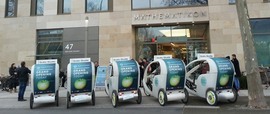

Image Collection: 
Files: 

IMAGINARY at EXPERIMINTA in Frankfurt

With its name, “IMAGINARY” hints at the fictive, the inconceivable of mathematics. Abstract mathematical formulae are brought to life.

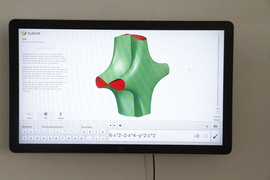
The first exhibit is the interactive program SURFER, which allows visitors to enter formulae in a big touchscreen with a finger or a swipe movement or to creatively change given ones, to define the emanating surfaces’ colors or to rotate them, thus generating images of algebraic surfaces in an easy and self-explanatory way. You do not need to grasp the mathematical concepts involved - also math haters can have fun changing the given formulae and watching evolve beautiful figures (the solution sets of the equations) in real time.

The second exhibit presents - on another touchscreen - the interactive geometry program Cinderella. Visitors can easily and quickly create geometric constructions including fractals. Moreover, one can run physical simulations with masses, springs and fields. This also allows to rework and complement exhibits devoted to other topics. Free from the limitations of reality, you can simulate scenarios from areas as diverse as mechanics and atom physics, as well as planet movements.

About the development of the software: The project IMAGINARY was designed by the Mathematisches Forschungsinstitut Oberwolfach as an aesthetically pleasing and interactive traveling exhibition. The exhibition succeeded not only in different European countries, but also in the USA and Russia. It is supported by the Klaus Tschira foundation, among others. Besides the Mathematisches Institut Oberwolfach and the Deutsches Museum in Munich, EXPERIMINTA in Frankfurt is the only German institution that permanently exhibits the IMAGINARY programs. The EXPERIMINTA exhibits are funded by the Citoyen foundation.

Time and Place: 
수요일, 6월 5, 2013 - 00:00 부터 23:45 까지
Venue: 
EXPERIMINTA
Hamburger Allee 22-24
60486 Frankfurt am Main
Germany
Coordinates: 
POINT (8.6479 50.11544)
Opening Hours: 

Monday 9am - 2pm
Tuesday to Friday 9am - 6pm
Saturday/Sunday 10am - 6pm

Files: 
Image Collection: 
Credits: 
EXPERIMINTA

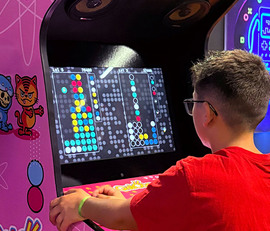
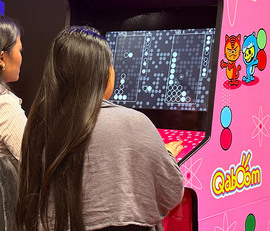
Quantum Arcade

Game 1: Qaboom 

Note: this game is made for a physical Arcade Machines, so it is a different experience to play it at home on your computer (it still works, not tested for tablets or phones). Controls: Player 1 with “wasd” for movement and “e” for flip and “q” for swap. Player 2 with “ijkl” and “o” and “u”. With “r” you can exit the game and with “p” you can pause/unpause the game. We also have gamepad support (still in test phase).


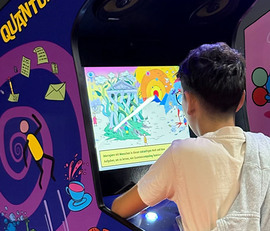
Game 2: Quantum Quest

Note: this is still a prototype and not yet fully ready for home or custom use (it is made for Arcade Machines!). Controls: Player 1 with arrow keys for movement and “e” for exit. Press “l” for language to switch between German and English.

Motivation

Quantum computing has gained global attention over the past two decades and is considered a transformative future technology. To familiarize the general public, particularly young people, with the foundational mathematical concepts and ideas behind quantum computing— and to encourage their participation — a low-threshold, audience-oriented approach is essential.

Goals and Approach

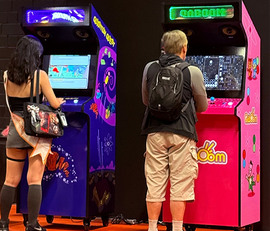
Our goal is to communicate the mathematical core concepts of quantum computing through games. We are developing two computer games: a skill-based platformer and a puzzle game. These will be presented as arcade machines in museums, public spaces, and events such as major video game conventions. The games will be accompanied by workshops featuring coding and co-creation components. Additionally, the project includes an openly published evaluation of knowledge transfer right from the beginning.

Innovation and Perspectives

The project’s innovation lies in transferring knowledge through arcade machines featuring computer games and showcasing these machines in museums and at a gaming convention. The computer games and workshop curriculum are openly licensed, allowing for further development and reuse of the content, including in participatory workshops, by museums and other multipliers. The project will be evaluated with input from the target audience from the outset. All content will be shared at international conferences and through partner networks.


This project is part of the program “Quantum aktiv – Outreach-Konzepte und Open Innovation für Quantentechnologien” by the BMBF. The project partners are IMAGINARY and the Max- Planck-Institut für Mathematik in den Naturwissenschaften. The Arcade Machines will be presented in Arcade Machines and will tour Germany. Supported by the Federal Ministry of Research, Technology and Space (Bundesministerium für Forschung, Technologie und Raumfahrt), Germany


Team: 
Andreas Matt (IMAGINARY)
Erika Roldan, Jörh Lehnert (MPI_MiS)
Eva Specker (IWM)
Nat Alison
Eric Londaits
Christian Stussak
Skye Rothstein
Karla Schön
Oliver Schön
Elisabeth Schaber
Alexa Lehmann
Ariel Kahtan
Retromat
지원: 
Federal Ministry of Research, Technology and Space (BMFTR)
Image Collection: 
Files: 
Quantum Arcade Postcard
Qaboom Manual (interim first version)
Timeframe: 
목요일, 2월 1, 2024 부터 수요일, 12월 31, 2025 까지
Open/Closed: 
Open

Math Family Day

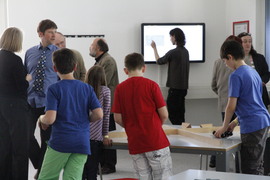
Various stations encourage everyone to get in touch with their mathematical site. Playful construction, soap bubbles, and savvy card games can be experienced together. A small list of all activities:
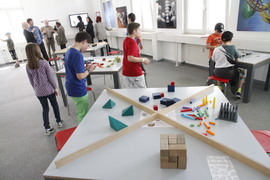
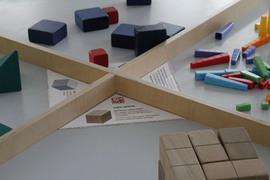
  • Geometry with Pattern Blocks and Zometool
  • Science Toys by Grunda Wichmann
  • Sudoku, Brainteaser and more riddles
  • interactive SURFER station to create algebraic surfaces (take home a print out of your surface/s!)
  • mathematical soap bubbles
  • the impossible triangle

Date and Time:

What:     Open day of Mathematics for the whole family

When:    Saturday, 6th September, 14 – 18 Uhr

Where:   Schulgarten Moabit, Birkenstraße 35, 10551 Berlin

Schulgarten Moabit, Birkenstraße 35, 10551 Berlin
  • Beim Mathe-Familien-Tag bieten wir ein abwechslungsreiches Programm mit mathematischen Themen, das alle Familienmitglieder – Kinder, Eltern, Großeltern – anspricht und zum gemeinsamen Erleben und Entdecken anregt. Es wird eine bunte Mischung aus offenen Angeboten und betreuten Stationen geben, sodass jeder eine für sich passende mathematische Aktivität finden kann.

Hier ist für jeden etwas dabei, für große und kleine Tüftler, für Rechengenies und solche, die es werden wollen.

Mathematik für die ganze Familie – das wird der Mathe-Familien-Tag am 6. September in Berlin! An vielen unterschiedlichen Stationen kann man einen Nachmittag lang spielen, bauen, basteln, konstruieren und programmieren. Und das alles kostenlos im Schulgarten Moabit!
Time and Place: 
금요일, 9월 5, 2014 - 00:00 부터 23:45 까지
Venue: 
Schulgarten Moabit
Birkenstraße 35
10551 Berlin
Germany
Coordinates: 
POINT (13.33961 52.53306)
Opening Hours: 

14:00 - 18:00

Files: 
Press Release (German)
Image Collection: 
Credits: 

Mathematikon in Heidelberg

The mathematical image gallery: Twelve large format images are presented together with easy-to-read descriptions. They provide an insight into different fields of mathematics.

The conveyor belts: For the supermarket and the drug-store of the shopping center, we created four different mathematical designs for the conveyor belts, so waiting at the cashiers can be fun and entertaining.

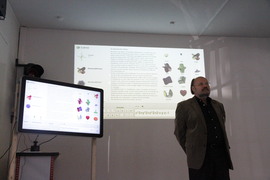
The multi touch screen station: The highlight of the mathematical content in terms of popularity as well as state of the art technology is the 84 inch multi touch screen station. It is mounted vertically in the central hall of the shopping mall. Altogether 10 interactive math games based on the Cinderella applets by Jürgen Richter-Gebert are offered, two of them can be explored at the same time; at a height for adults and children.

Riddles: Integrated in the bathroom mirrors are screens, which display 25 short riddles. The technique hides the screens, so only the writing can be seen. After a countdown, the solution is given, which is mostly just one word or a number. The riddles are of varying difficulty and cover different areas of mathematics.
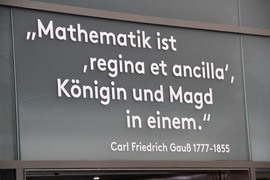
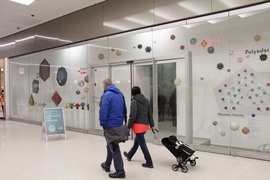
Classic quotes: Two classic mathematical quotes by Gauss and Galileo are displayed on the glass walls near the elevators to be viewed from almost any angle in the public area of the shopping center. The quotes intend to be thought provoking and emphasize the central and important role of mathematics.
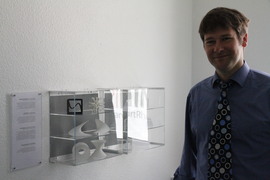
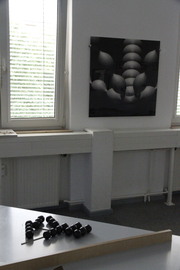
Shop window display: Shop windows of an unoccupied shop unit were used to temporarily display a combination of math and art. Starting with the general concept of polyhedra, we introduce some basic background information like the Euler characteristic, nets of polyhedra and more.

Time and Place: 
목요일, 2월 18, 2016 - 00:00 부터 23:45 까지
Venue: 
Mathematikon shops
Mathematikon
Berliner Str. 41-49
69120 Heidelberg
Germany
Coordinates: 
POINT (8.675543 49.4187591)
Files: 
press release of the opening (German)
Bridges paper on the Mathematikon (English)
Image Collection: 
Credits: 
The Mathematikon building complex has been planned and built by the Mathematikon Heidelberg GmbH (n. S. R.) & Co. KG.

LPDJLQH D VHFUHW

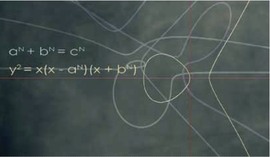
(3, 4, 5) 혹은 (4961, 6480, 8161) 같은 피타고라스 순서쌍(피타고라스 정리의 식인 a^2+b^2=c^2을 만족하는 정수의 순서쌍)들은 기원전 1600년전 경 고대 바빌로니아인들에게 잘 알려져 있었습니다. 그들은 또한 정수 변을 가지는 직각삼각형이 주어진 제곱수를 두 제곱수의 합으로 나타내는 문제와 대응됨을 알고 있었습니다. 이런 순서쌍이 기원전 300년전부터 자세히 연구되어 왔음에도 불구하고, 페르마(Pierre de Fermat)가 다음의 유명한 관찰 결과를 내놓은 것은 17세기 중반에 이르러서였습니다. “세제곱수는 두 개의 세제곱수로 나누어질 수 없으며, 네제곱수 역시 그러하고, 더 일반적으로 2 이상의 거듭제곱수는 같은 종류의 거듭제곱수의 합으로 나타낼 수 없다.”

“A^N+B^N=C^N 식에서 N이 2 이상일 때는 0이 아닌 정수해가 존재하지 않는다”는 이 관찰은 유명한 “페르마의 마지막 정리”가 되 었습니다. 이는 3세기 반이나 지난 1994년에 20세기 타원곡선 이론을 사용하여 완전히 증명되었습니다.

타원곡선은 깊고 아름다운 성질을 갖습니다. 이는 19세기 즈음부터 연구되어 온 y2 = x3 + a·x + b 라는 형태로 표현되는 평면곡선입니다. 아핀 평면(affine plane)서의 이 방정식은 동차방정식 y2 z= x3 + a·xz2 + b·z3 에 대응되고, 이는 공간에서 두 개의 변수 a,b 를 갖는 대수곡면의 모임을 나타냅니다. 이 식을 변형시켜 우리 상상력과 수학적 창의성을 자극하는 애니메이션을 만들 수 있습니다. 

암호학은 비밀 혹은 귀중한 정보를 전송하고 보호하는 안전한 방법을 일컫습니다. 1977년부터 널리 사용된 RSA 공개 키 방식은 소수의 이론과 매우 큰 정수의 인수분해를 이용하여 만들어졌습니다. 타원 곡선 방법론이 정수의 인수분해에 미친 지대한 영향 덕분에 타원 곡선 암호(ECC)가 1985년 수학자들에 의해 고안되었고, 그 이후 암호학에서의 수학적 정교함은 새로운 단계로 발전하였습니다.

ECC 알고리즘의 보안은 타원 곡선의 이산 로그(discrete logarithm) 문제에 기초하고, 이는 유한체(finite filed) 연산에서는 더 어려운 문제처럼 보일 수도 있습니다. 근래의 수학적 발전은 ECC에서는 비교적 작은 크기의 키로 충분한 보안 수준을 보장할 수 있다는 것을 말해줍니다. 예를 들어 160 비트의 ECC 키는 1024 비트 RSA 키와 비슷한 보안 수준을 만들어 냅니다.

타원 곡선 이론은 정수론, 대수학과 기하학 간의 연관성의 아름다움을 보여주며, 전자상 거래나 통신 보안을 강화하는데 강력한 수학적 툴을 제공합니다. 카이사르 암호는 d = c - 3 (mod 26) 와 같은 단순 사칙연산만 사용하는데 이는 구식입니다. 그러나 이는 이 영상의 제목을 해독하는 열쇠입니다. (역주: 제목의 알파벳 글자들을 3칸만큼 앞으로 옮겨 보세요.

영상은 아래의 링크에서 다운받을 수 있습니다. (포르투갈어, 독일어, 영어 그리고 스페인어 지원)

http://www. cim.pt/LPD-UHW

Embed External Video: 
Credits Collection: 
Initiative by Centro Internacional de Matemática, Casa da Animação and Mathematisches Forschungsinstitut Oberwolfach.
José Francisco Rodrigues
Victor Fernandes, Stephan Klaus, Armindo Moreira, José Francisco Rodrigues
Victor Fernandes, Armindo Moreira
Andreas Matt, Bianca Violet
Victor Fernandes, Armindo Moreira
지원: 
Acknowledgments: CMAF/Universidade de Lisboa, Fundação Calouste Gulbenkian, IMAGINARY exhibition, Vila de Óbidos Sponsored by CIÊNCIA VIVA.
Files: 
Image Collection: 

Exhibition/User:

페이지