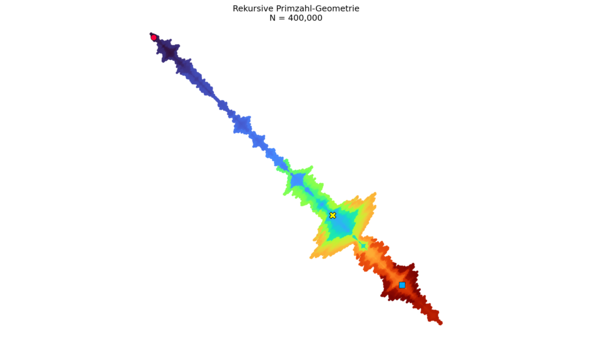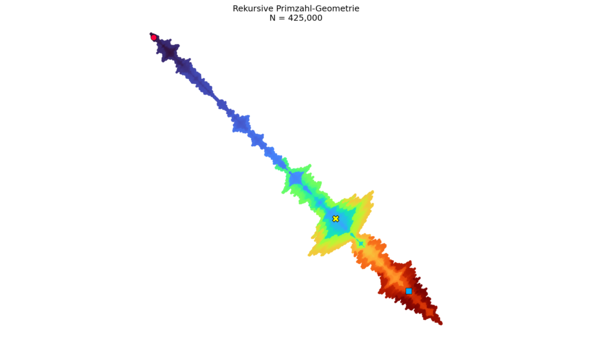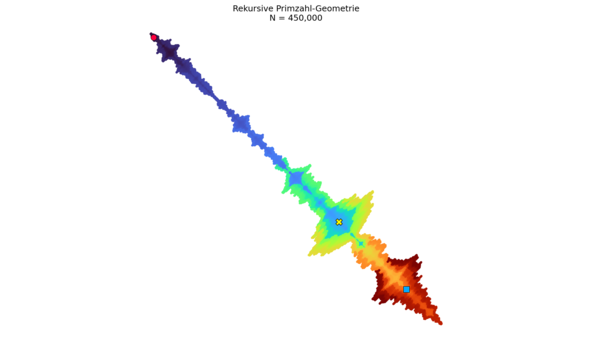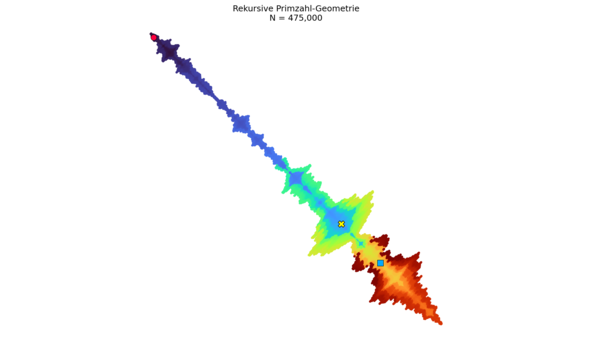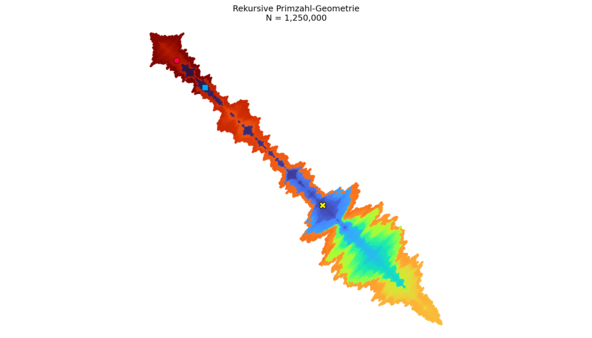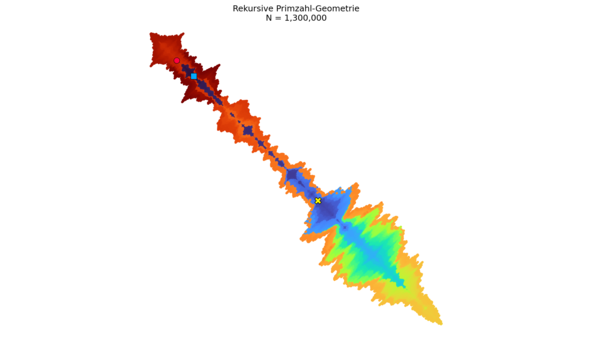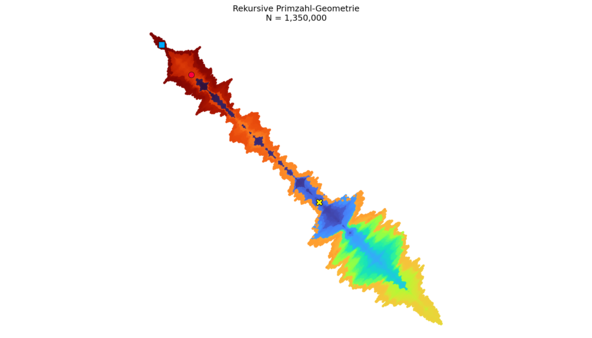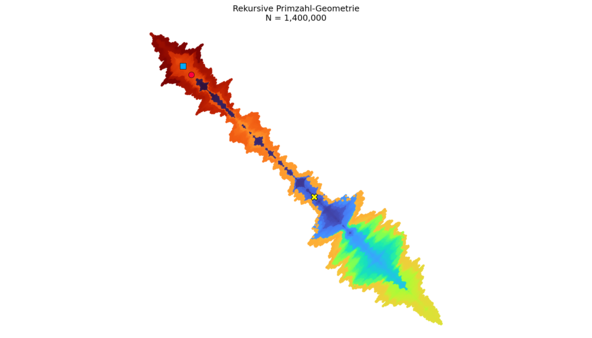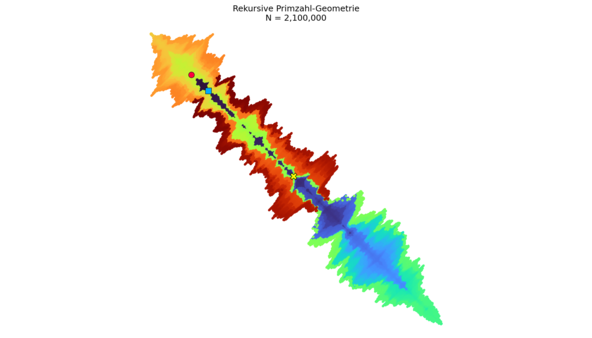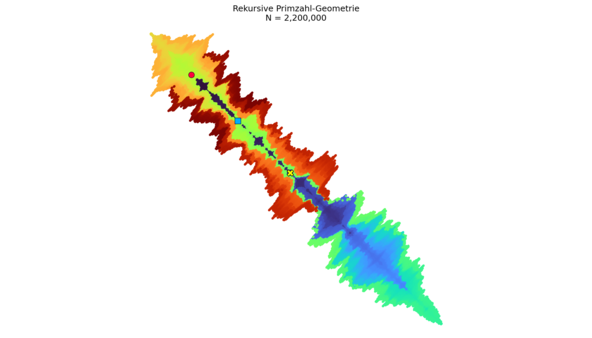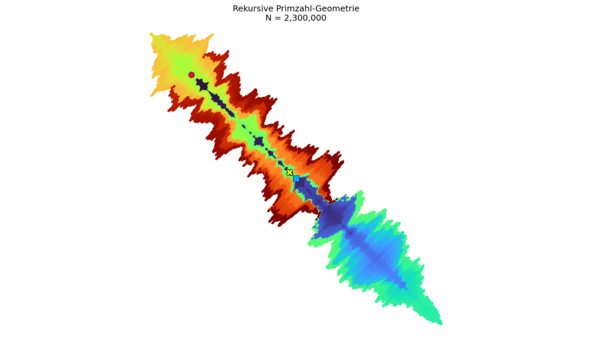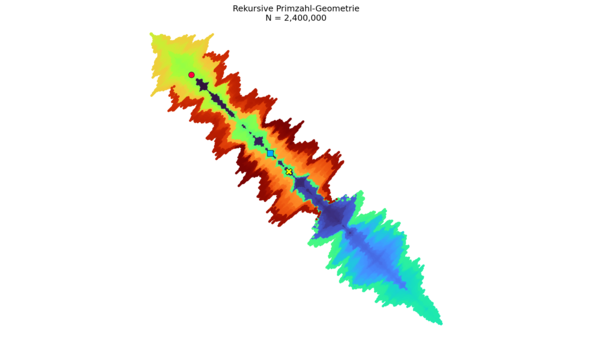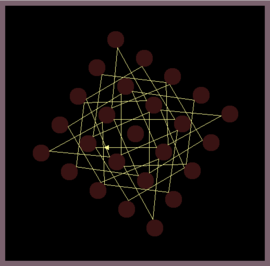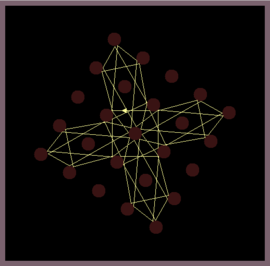
Prime Geometry after 8000000 Integers
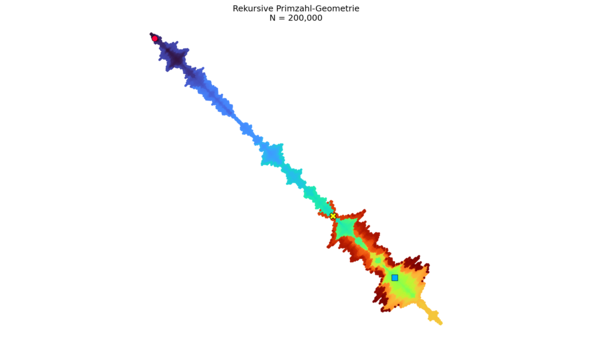
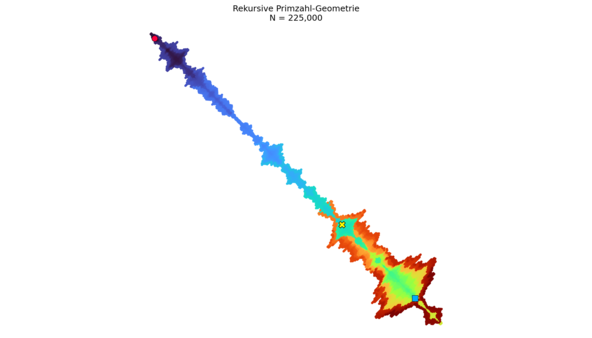
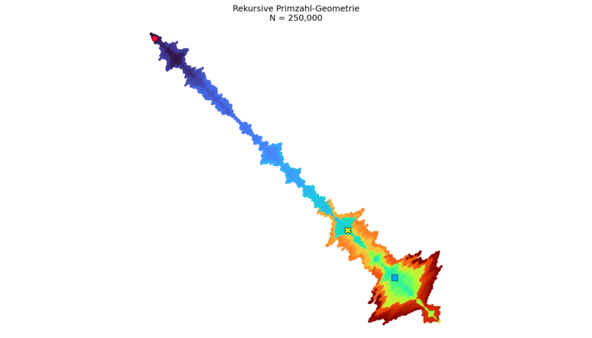
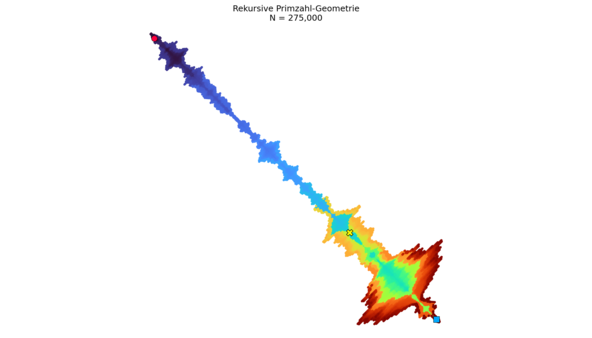
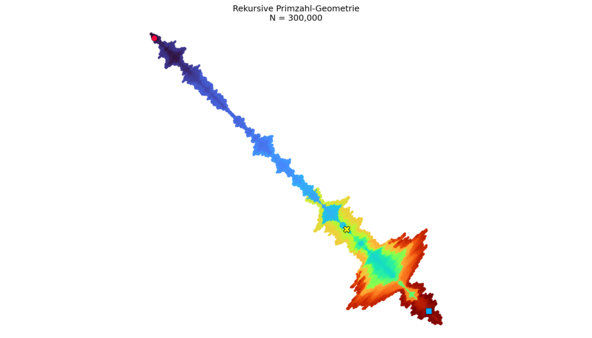
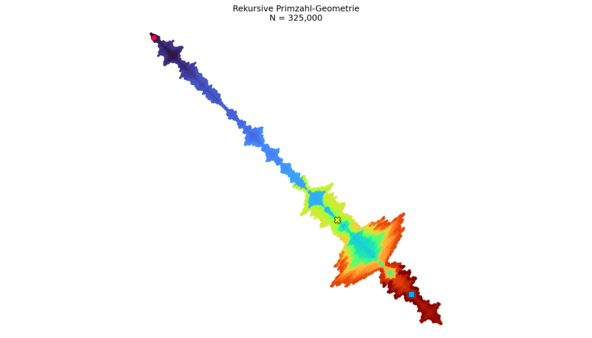
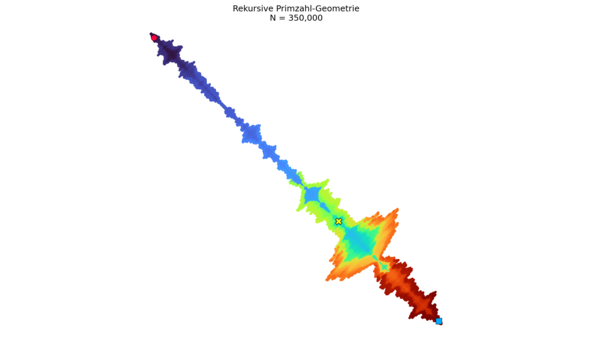
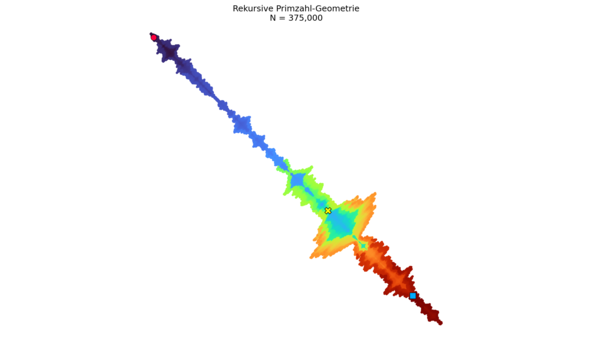
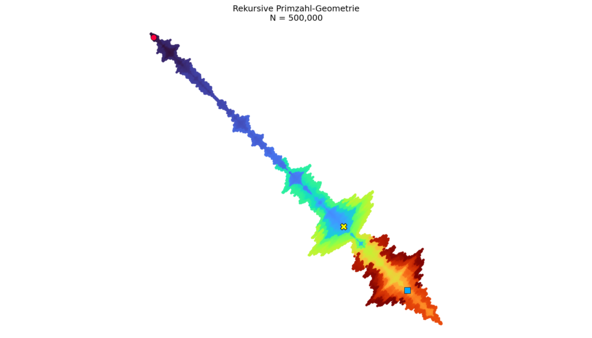
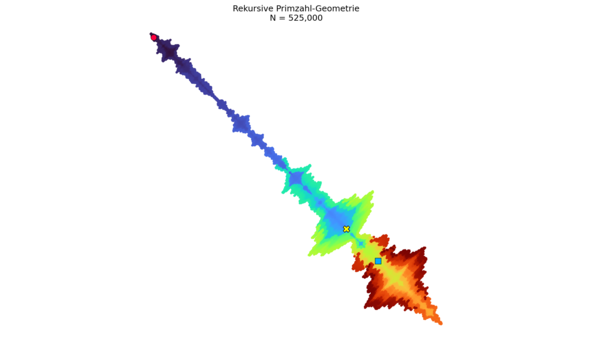
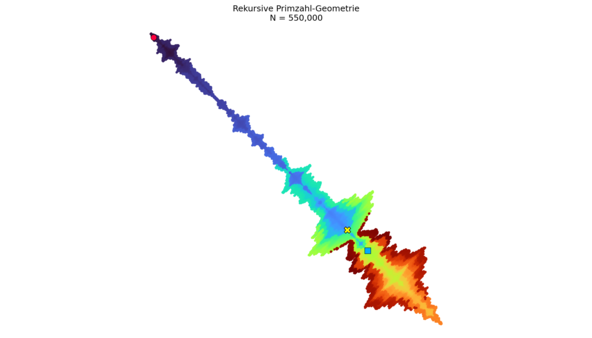
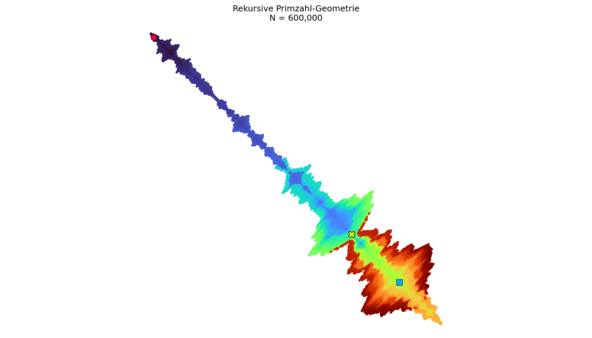
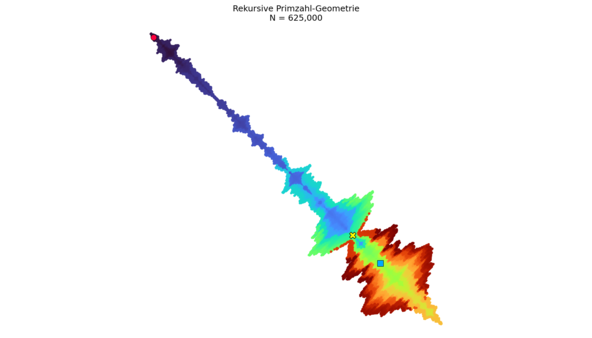
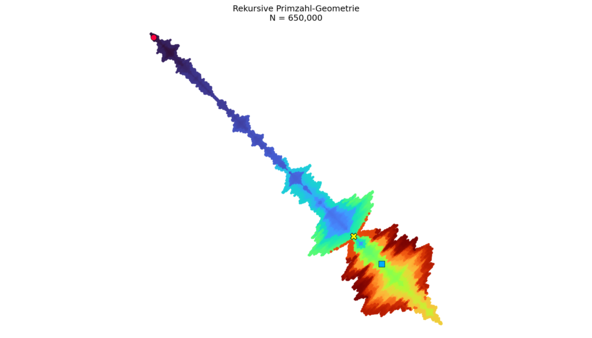
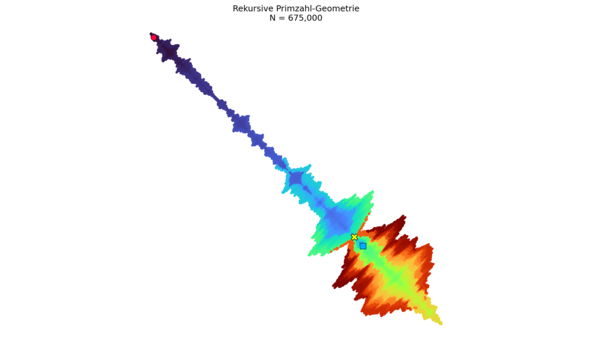
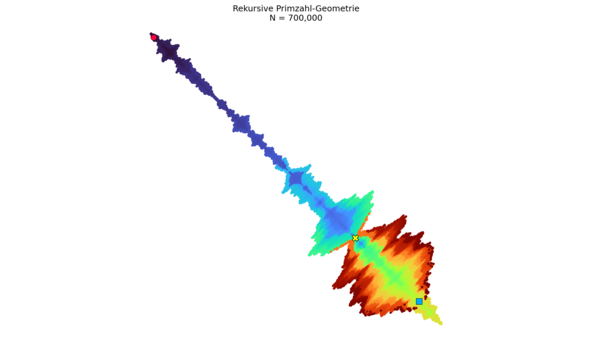
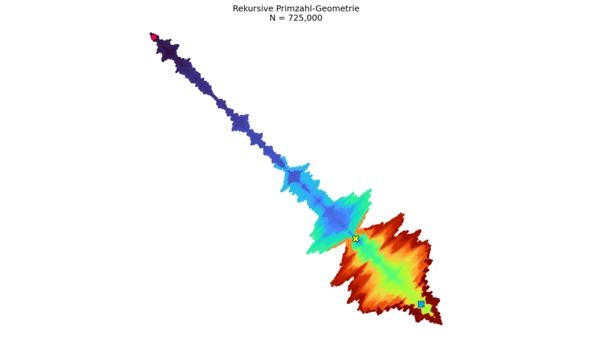
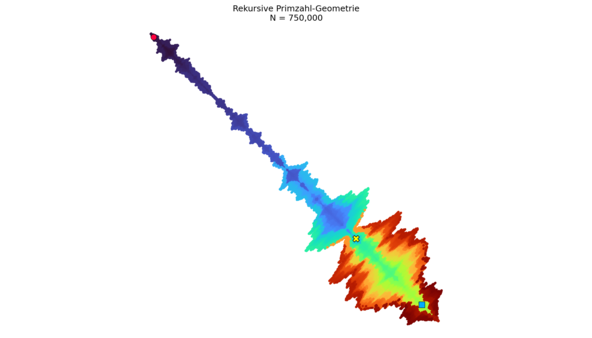
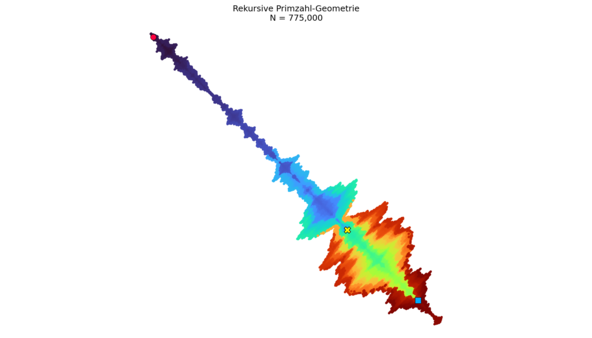
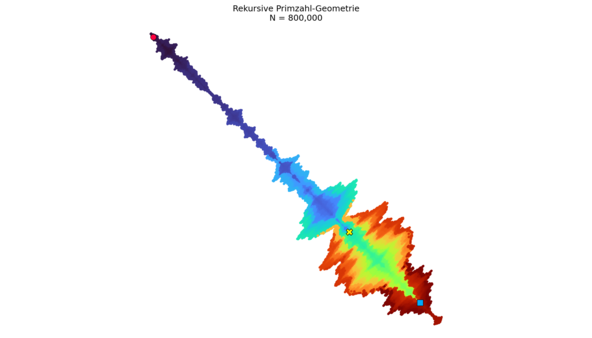
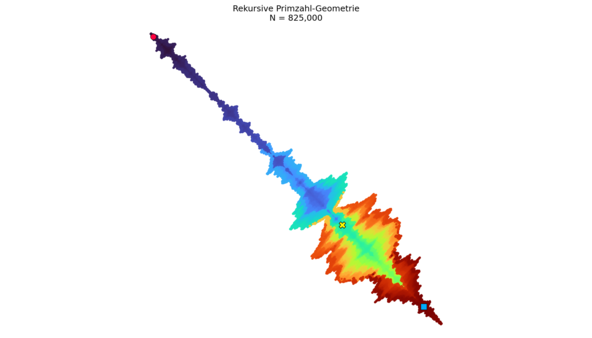
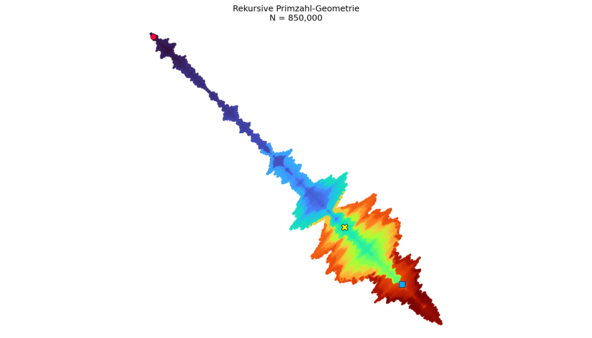
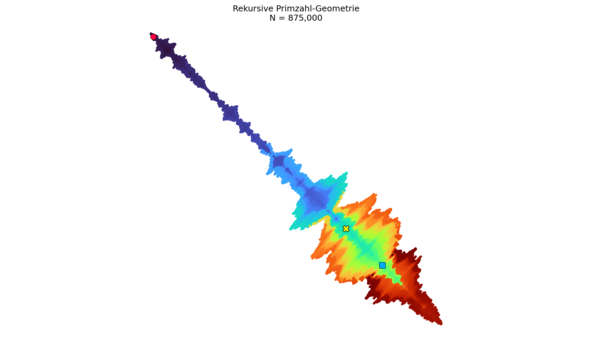
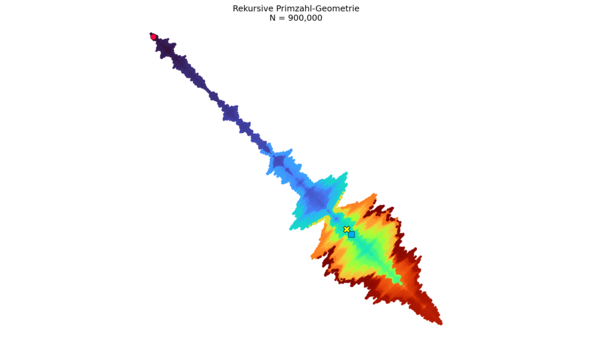
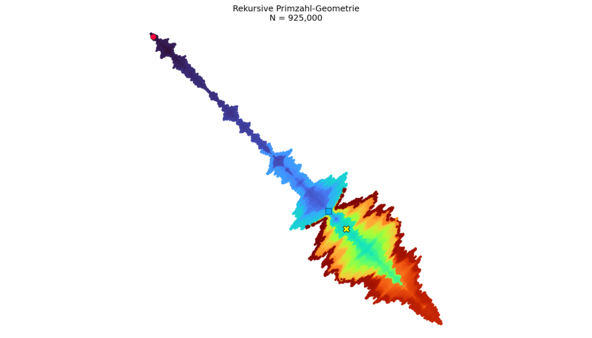
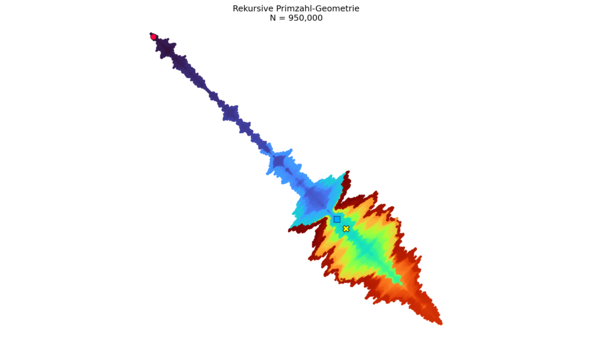
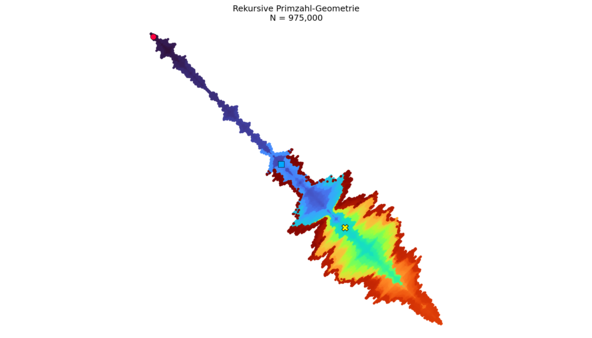
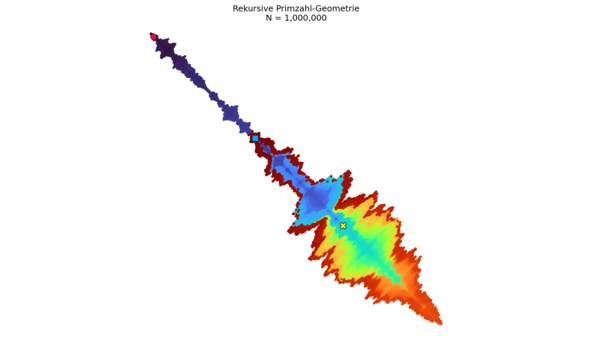
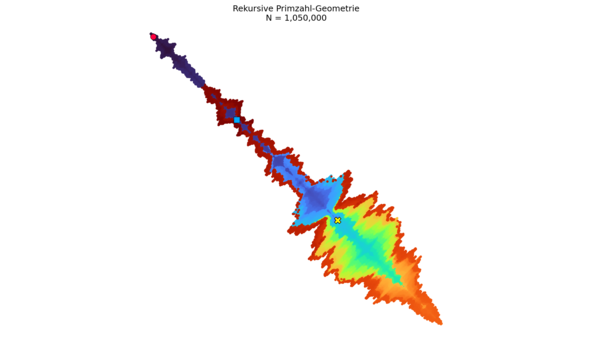
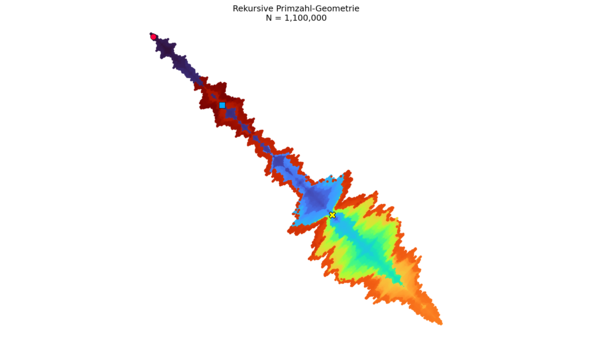
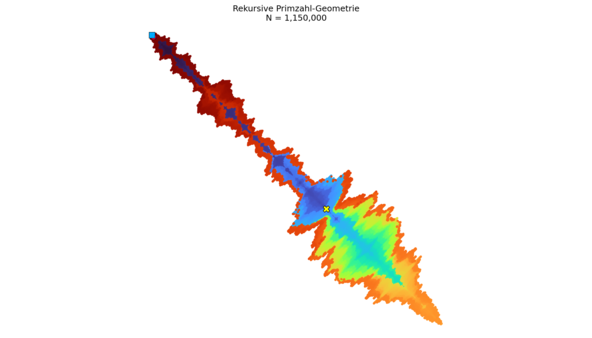
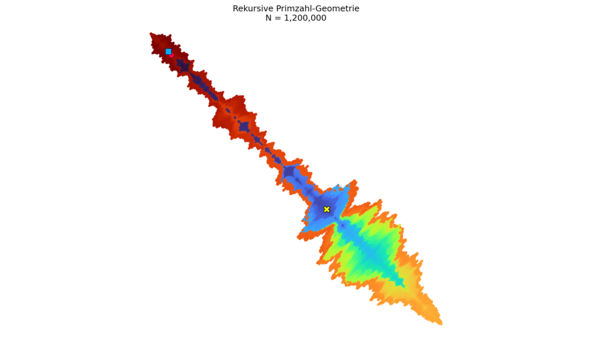
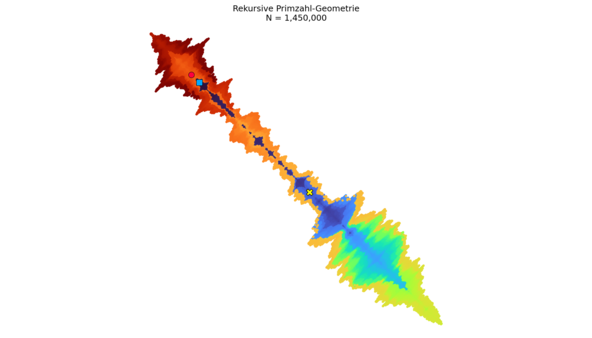
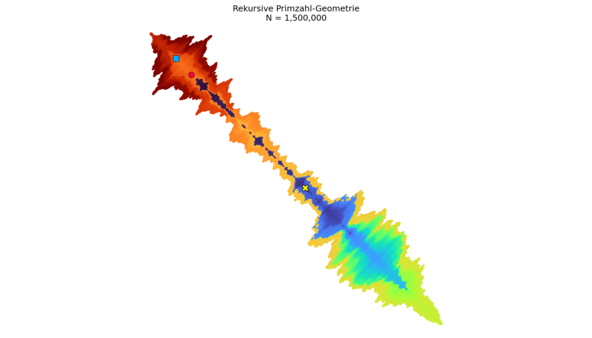
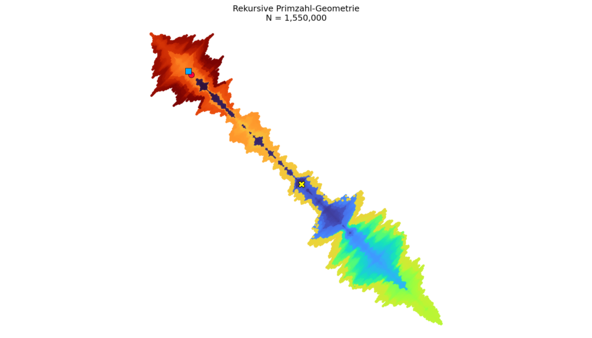
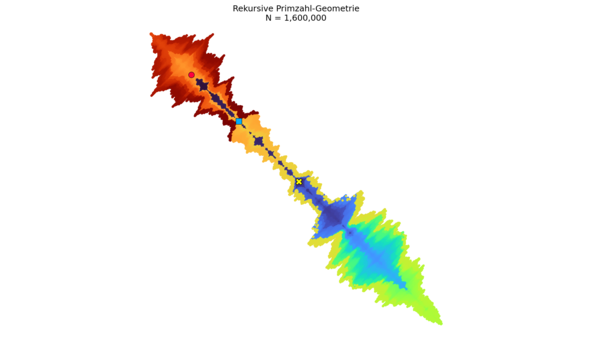
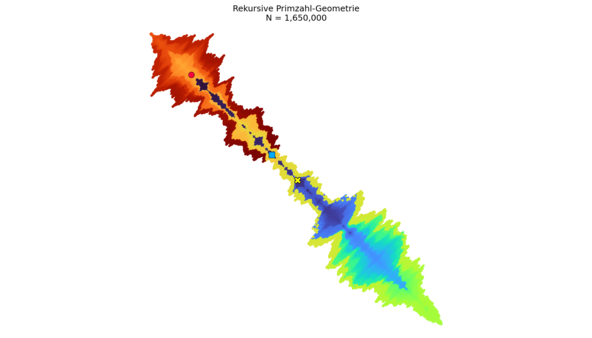
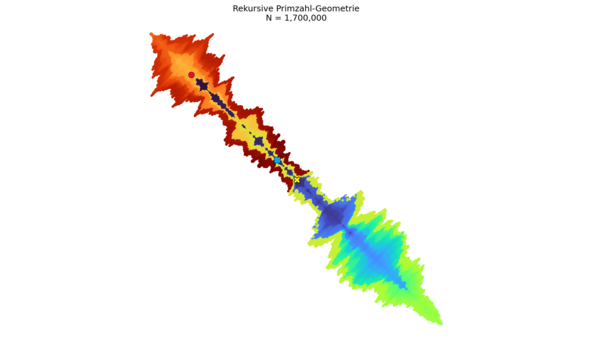
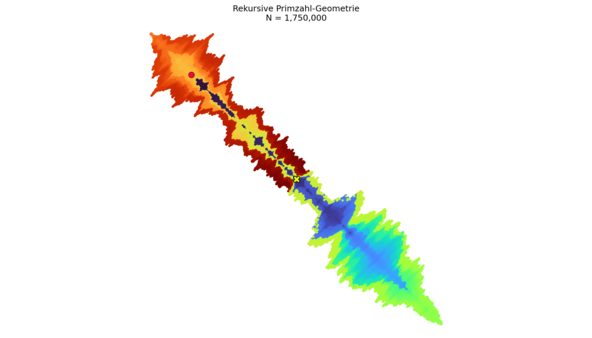
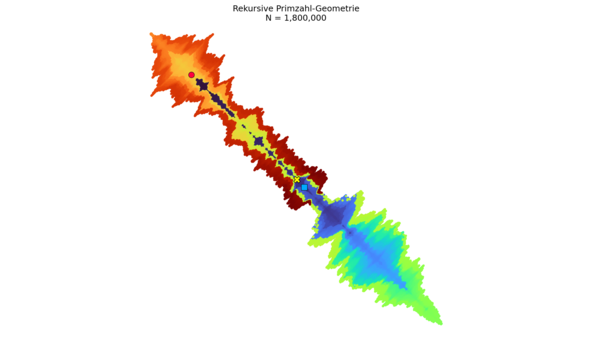
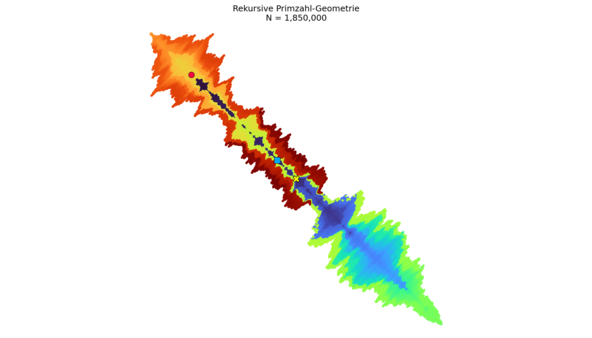
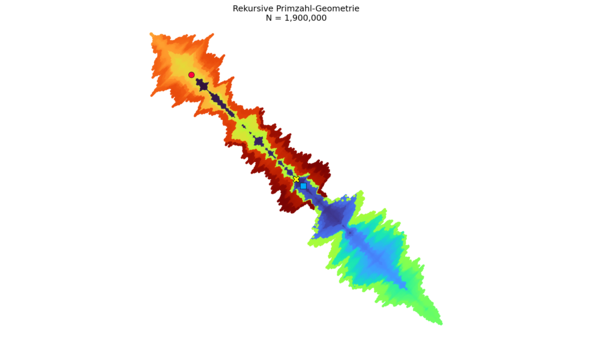
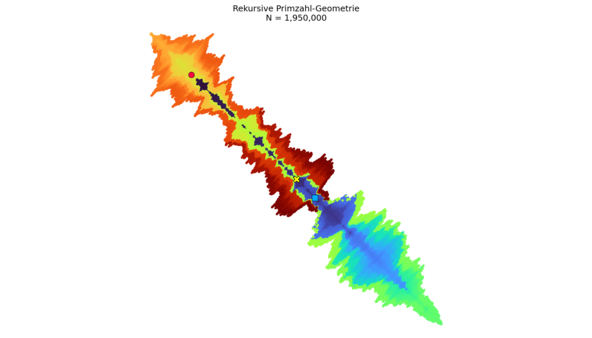
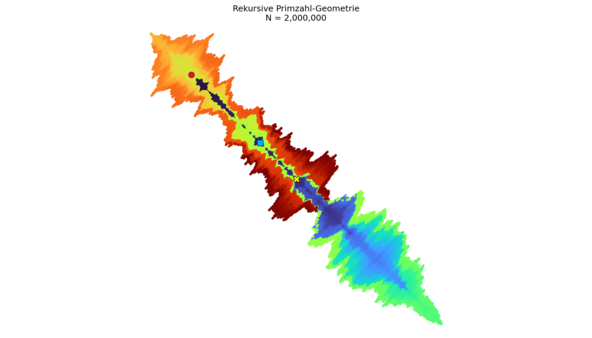
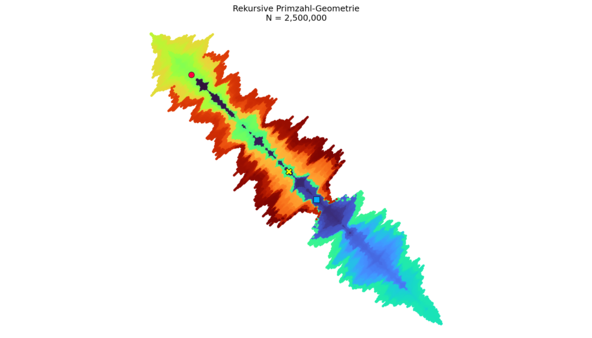
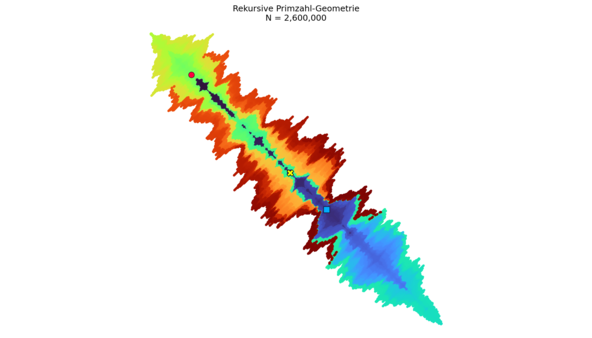
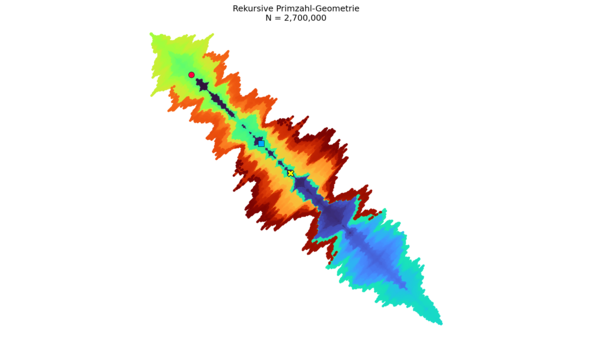
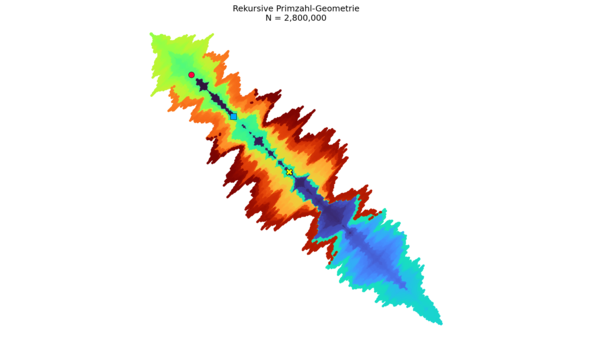
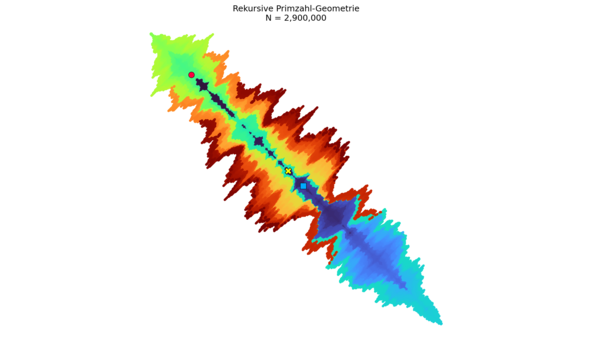
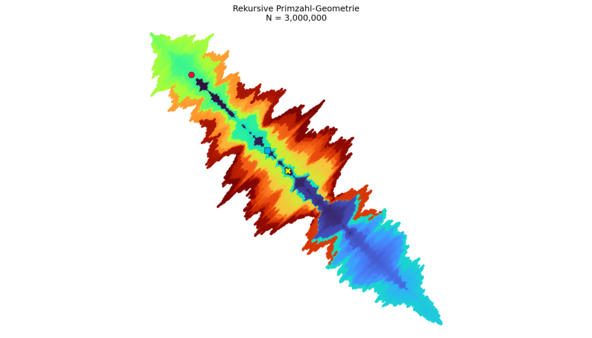
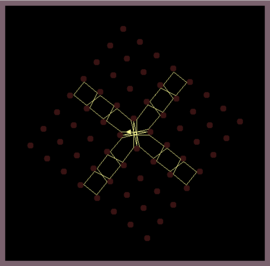
This figure was generated using the Prime Geometry algorithm.
Starting from an initial position and tangent direction, each processed integer determines the orientation of the next circular arc according to a deterministic turning rule.
For this experiment, prime numbers and composite numbers produce different rotation angles. The circular arcs are connected tangentially, forming one continuous geometric trajectory.
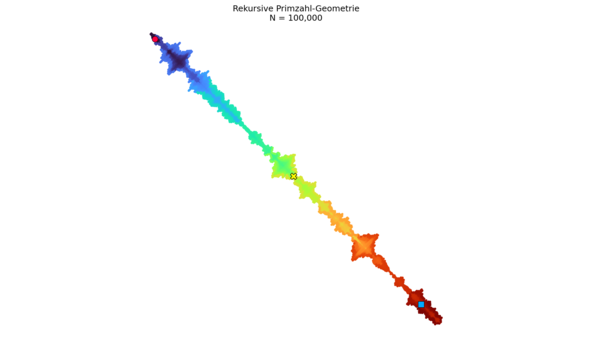
The visualization shown here corresponds to the first 100,000 processed integers.
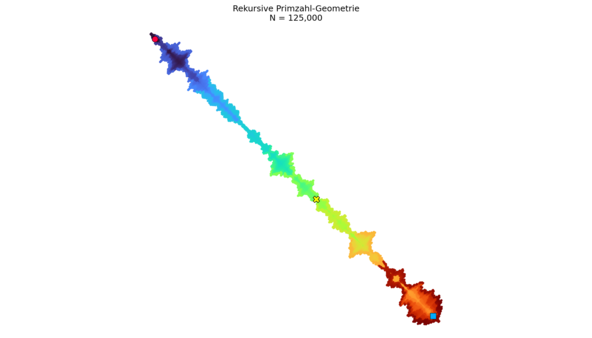
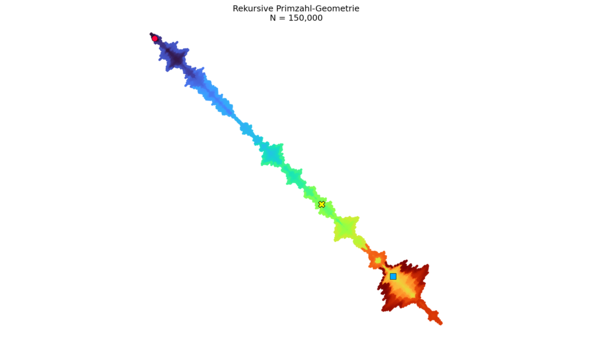
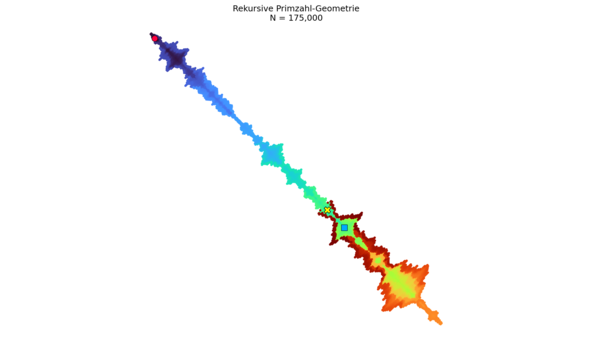
The color gradient represents the chronological progression of the construction, beginning with dark blue and ending in dark red.
The red marker indicates the final position of the trajectory.
The yellow marker represents the geometric centroid of the complete construction.
The blue square marks the centroid of the projected prime-family points computed by the algorithm.
This visualization is intended as a computational exploration of geometric representations generated from integer sequences. It does not claim a new theorem, a new primality test, or a mathematical proof concerning the distribution of prime numbers.