Warming navigator
Explore the temperature trend
Icon:
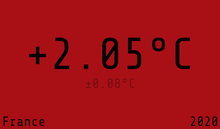

Explore the temperature trend
With a box model, we can predict the future by simulating the complex interactions between different processes. The results are often surprising, even though the connections between the processes are well-known and predictable.

The movement of balls, cars, and rockets can be explained mathematically. Similarly, the Navier-Stokes equations can explain and predict the movement of fluids, like ocean water, atmosphere gases, an oil spill, smoke, or Currywurstsoße.

General Circulation Models (GCM) are the most precise tool we have to assert that climate change is a reality. GCMs are detailed models of the whole Earth, divided into many small cells of just a few kilometers’ width.
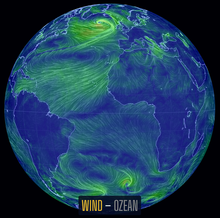
Play as a human or as an artificial intelligence to find out how human thinking differs from how an AI processes things. In which way does the human way of playing differ from the AI’s way of playing? What is the difference between ‘knowing’ and ‘understanding’? Can you develop a winning strategy when playing as a human?
It’s your first day in your new job. Together we will attempt to lower the crime rate of your city. Click through the story and let us dive into a topic full of questions: Where are the limits to using artificial intelligence? How important are transparency and data safety for you? What happens when prediction methods make mistakes?
Submitted by Bianca Violet on
“Future Mobility - The Board Game” is for 3-4 players aged 8 and older, made to be printed by yourself. Players move through their city applying concepts of real urban planning, such as the Avoid - Shift - Improve model.
Submitted by Bianca Violet on
What is a Neural Network?
Beautifully explained using the example: number recognition.
Submitted by Bianca Violet on
Footage of a live experience where an AI was trained to win at Tic Tac Toe by using matchboxes filled with plastic beads to adjust probabilities based on past games.
An AI that uses Reinforcement Learning learns through trial and error by directly interacting with its environment. It’s similar to how humans and animals learn.