The Emergent Landscapes
“There remains one a priori fallacy or natural prejudice, the most deeply-rooted […] This is, that the conditions of a phenomenon must, or at least probably will, resemble the phenomenon itself.”
Mill, J. S. (1843). A System of Logic.
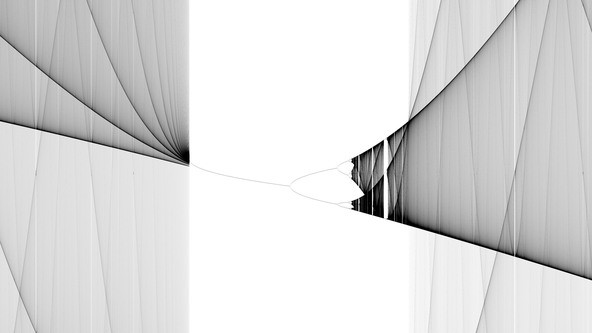
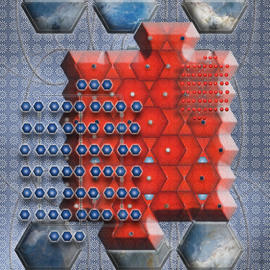
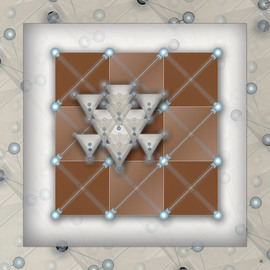
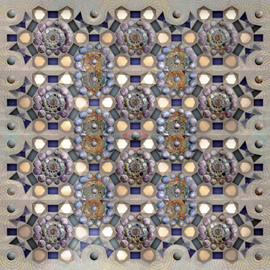
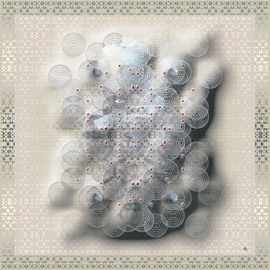
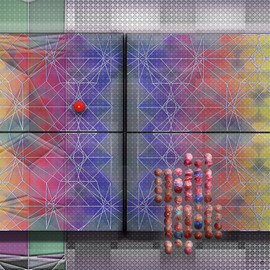
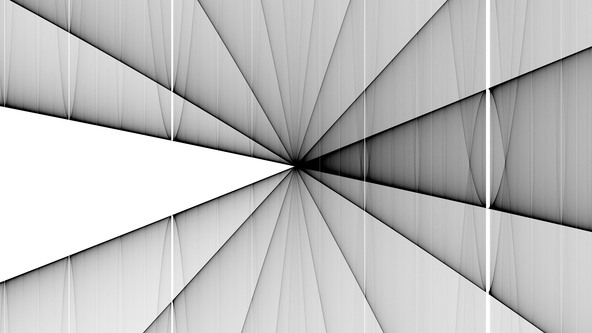
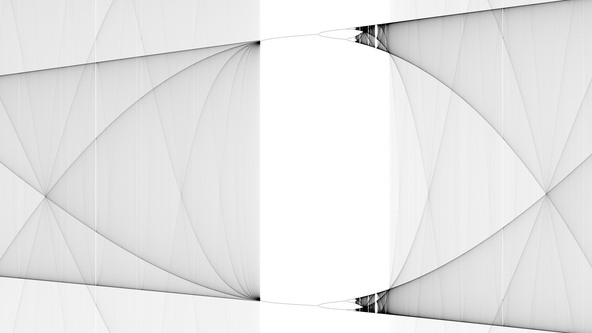
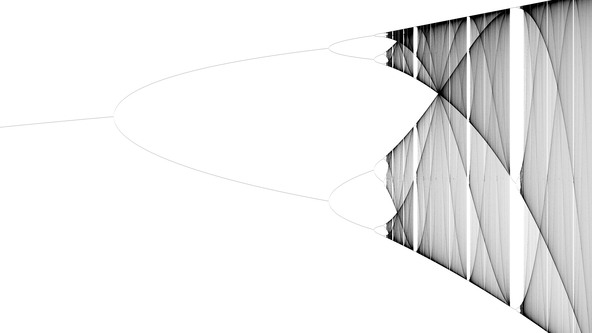
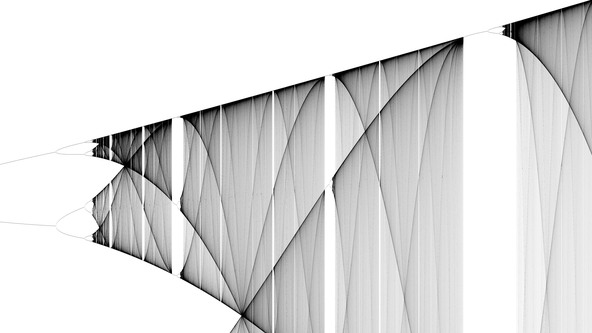
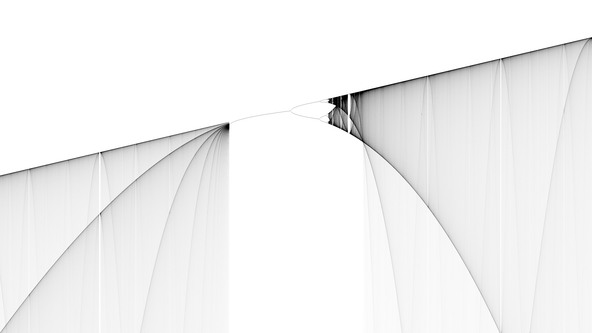
The Emergent Landscapes are a series of large-scale fine art prints generated from the logistic map, the deceptively simple equation
x_n+1 = rx_n(1-x_n)
that, iterated millions of times, produces the period-doubling cascade into chaos discovered by Mitchell Feigenbaum in the 1970s — a bifurcation pattern that recurs, with striking universality, in many phenomena, from fluid turbulence to cardiac rhythms.
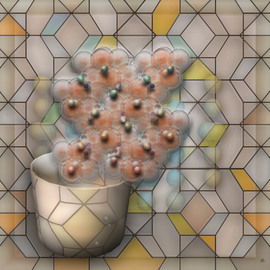
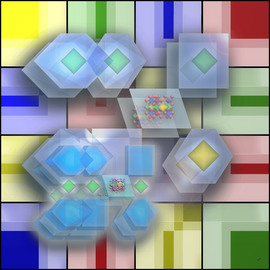
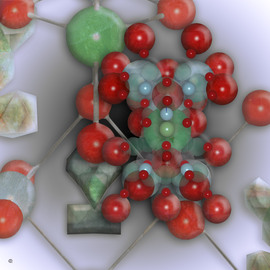
The artist explores the attractor, choosing where to point the lens, at what depth of zoom, for how long to expose. The creation of each portrait is a photographic process: many iterations are accumulated, pixel by pixel, into a density map, where brightness records how often the dynamics visit each point of the plane.
The Emergent Landscapes are born from the interaction between the explorer and that world: he searches for himself in what he sees, and it shows him who he is.
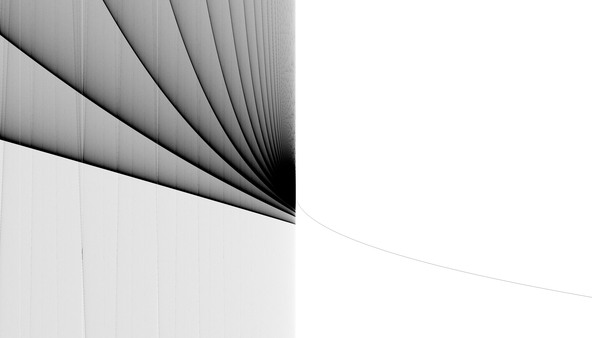
Valley
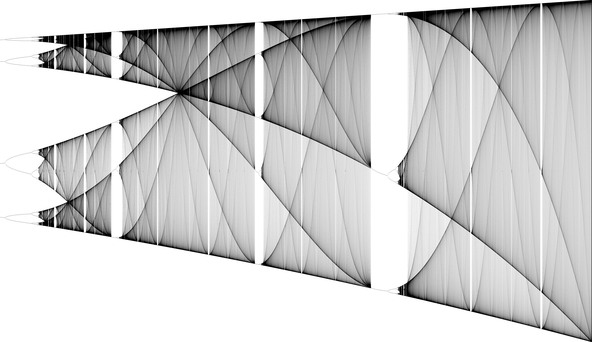
Manifold
Zero

Field
Relation
Ontology
Scale
Limit