Drone in Greenland
Enviado por Guillaume Jouvet el
This 5-min-long film shows how scientists use drones to monitor and model the detachment of icebergs (calving) from the Bowdoin Glacier in Northwest Greenland.

This license is the most restrictive of our six main licenses, only allowing others to download your works and share them with others as long as they credit you, but they can’t change them in any way or use them commercially.
Enviado por Guillaume Jouvet el
This 5-min-long film shows how scientists use drones to monitor and model the detachment of icebergs (calving) from the Bowdoin Glacier in Northwest Greenland.
Enviado por Marvin Bratke el
The BatWing sculpture represents a tangible way to approach mathematics. The sculpture, based on a triple periodic minimal surface, physically expresses the forces inside the structure to give visitors an appeal to applied geometry solutions.
MatchTheNet is a game about 3-dimensional polytopes for a single player. You will meet the five Platonic Solids and their best friends!

Enviado por Bianca Violet el
We approximate and effectively simulate different characteristic patterns of a drum vibration using algebraic surfaces.
Enviado por Bianca Violet el
What are the similarities of the mineral pyrite, the dodecahedron as the fifth Platonic solid, and a polynomial of degree 16? This paper explores this connection by using the free software SURFER of the IMAGINARY open mathematics platform, which leads to fascinating pictures displaying transformations from a cube to a dodecahedron, to a rhombic dodecahedron, and to an octahedron, using a single formula. A survey on the ideas and the mathematics behind these visualizations is given.
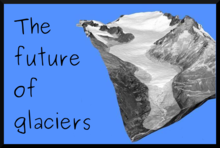
Alpine glaciers have been shrinking for more than one century. This trend is expected to continue if the global warming progresses. Thanks to mathematical models, the future evolution of glaciers can be estimated.
Enviado por Bianca Violet el
We visualize simple geometric beauty combined with mathematical content. Please enjoy.
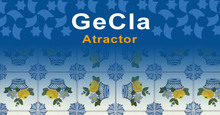
GeCla, short for Generator and Classifier, is a program for exploring the symmetries of of patterns/friezes or rosettes in the plane. GeCla allows you to generate a pattern, a frieze or a rosette with a previously chosen kind of symmetry starting from an asymmetric motif. It also allows the classification (with or without help from the program) of the patterns, friezes, rosettes obtained in this manner.
Enviado por Guillaume Jouvet el
In March 1926, four young men did not return from a mountain hike at the Aletsch Glacier. It was not until 2012 that their remains were found. This film explains how scientists reconstructed the accident of the mountaineers using a mathematical model, which describes the motion of the ice.
Enviado por IMAGINARY el
Through computer animations and fly-throughs, The Shape of Space explores the possible shapes of our universe. It suggests the possibility of a finite but boundless shape for our space. Using objects such as spheres, cylinders, and Möbius strips as possible shapes for a two-dimensional universe, The Shape of Space investigates corresponding three-dimensional shapes, and encourages the viewer to imagine how our universe could be formed by one of these.