Ara

Arama sonuçları

Total results: 127.

Panel at 8th Forum Wissenschaftskommunikation

The discussion panel will be on Tuesday Dec 1, from 5pm - 6:30pm.

Abstract of the panel (in German):

Interdisziplinäre und partizipative Formate stellen einen wachsenden Trend in der Wissenschaft, Kunst und Kommunikation dar und vereinen Kreative unterschiedlicher Fachrichtungen: wissenschaftliche Konferenzen werden zu partizipativen Festivals von ForscherInnen und KünstlerInnen, Ausstellungen werden von WissenschaftlerInnen und dem Publikum gemeinsam entworfen und eigenständig organisiert und neue Museen zeigen nicht nur Kunst & Wissenschaft, sondern erforschen selbst experimentelle Museums-Technologien für andere Museen. 

Die junge Szene boomt, ist international ausgerichtet und bringt viele neue Initiativen und Akteure hervor – innerhalb und außerhalb der Wissenschaftsinstitutionen. Ist das eine Chance für die Wissenschaftskommunikation, um neue Zielgruppen zu erschliessen? Wie ist mit den neuen Initiativen und Formaten umzugehen? Wie können diese von Wissenschaftseinrichtungen genutzt werden, um einen Mehrwert für die Vermittlung von Wissenschaft zu schaffen? Diese Session gibt beispielhaft Einblick in nationale und internationale Projekte und Entwicklungen und diskutiert die Möglichkeiten im Rahmen der Wissenschaftskommunikation von Forschungseinrichtungen und Universitäten.

Time and Place: 
Pazartesi, Kasım 30, 2015 - 00:00'den Çarşamba, Aralık 2, 2015 - 23:45'e kadar
Venue: 
Meistersingerhalle
Münchener Straße 19
90478 Nürnberg
Germany
Coordinates: 
POINT (11.1022915 49.4369085)
Files: 
Image Collection: 
Embed External Video: 
Credits: 
Organised by Wissenschaft im Dialog.

La La Lab – the Mathematics of Music at MAINS in Heidelberg

Conceived in collaboration with experts in current research of music and mathematics, La La Lab mixes a laboratory format with interactive exhibits to present you with the stunning connections between mathematics and music pushing the boundaries of musical creativity and mathematical knowledge. It features more than a dozen interactive exhibits with newly developed software, images, 3d prints, hands-on installations, projections and a special reading and listening area. The exhibition is also part of the German Science Year of Artificial Intelligence 2019 presenting several exhibits on AI and music.

 The exhibition pivots over three axis (mixed inside the Lab):

  • Music theory.
    Learning what tools build music, and how these tools are used to create art. Basic concepts and historical comments.

  • Current research.
    The latest trends of research in the connection of maths and music. Artificial Intelligence, theoretical and new instruments, classification and composition tools.

  • Art and entertainment.
    A joyful display of artworks from artists and mathematicians in the field. Talks/concerts at scheduled events.

The exhibition is created by IMAGINARY, with the scientific and artistic advisorship of Moreno Andreatta (IRCAM Paris, Univ. Strasbourg), Thomas Noll (ESMUC Barcelona), Luisa Pereira and Manuela Donosa (New York) and Jürgen Richter-Gebert (TU Munich); and with the generous contributions of more than 20 artists and scientists working in the field.

The exhibition is presented by the Heidelberg Laureate Forum Foundation (HLFF), who created MAINS, a special event and exhibition venue dedicated to mathematics and informatics. The former showroom of the “Heidelberger Druckmaschinen” offers plenty of space to raise public awareness of the disciplines’ importance for society.

The exhibition was made possible by the Klaus Tschira Stiftung. It is supported by the Technical University of Munich.


Time and Place: 
Cuma, Mayıs 17, 2019 - 00:00'den Pazar, Aralık 20, 2020 - 23:45'e kadar
Venue: 
MAINS
Kurfürsten-Anlage 52
69115 Heidelberg
Germany
Coordinates: 
POINT (8.6793448 49.405424)
Opening Hours: 

closed during September 2020

opening hours:

August 2020:
Saturday and Sunday: 1- 6 pm

October-December 2020:
Thursday and Friday: 3 - 6 pm
Weekends and Holidays: 1 - 6 pm

entrance is free

guided tours every Sunday at 3 pm

Files: 
Short concept (PDF, English)
Exhibition poster (PDF, English)
Exhibition booklet (PDF, English)
Image Collection: 
Credits: 
Moreno Andreatta
Thomas Noll
Jürgen Richter-Gebert
Luisa Pereira
Manuela Donosa
Andreas Matt (Direction)
Kathrin Unterleitner (Project Management)
Daniel Ramos (Curation)
Bianca Violet (Content)
Christian Stussak (Software)
Eric Londaits (Software)
Sebastián Uribe (Software)
Malte Westphalen (Design)
Konrad Renner (Design)
Lukas Reck (Production)
Daniel Weiss (Production)
Tobias Hermann (Hardware)
Magdalena Hreczynska (Assistance)
Antonia Mey (Assistance)
Moreno Andreatta, Corentin Guichaoua, Philipp Legner
Ryan Cashman
Luisa Pereira, Manuela Donoso
Jürgen Richter-Gebert, Aaron Montag, Patrick Wilson, Konrad Heidler
Vítor Rolla, Pedro Arthur, José Ezequiel Soto Sánchez
Neil Sloane, Georg Fischer, William Cheswick, Charles Greathouse
Neil Thapen
Thomas Noll
Gerhard Widmer, Stephan Balke, Florian Henkel, Carlos Eduardo Cancino Chacón
Ricardo Dodds
Gilles Baroin
CNRS/IRCAM/Sorbonne University
USIAS (University of Strasbourg Institute for Advanced Study)
IRMA/University of Strasbourg
Team der Heidelberg Laureate Forum Foundation
Technische Universität München
Springer Publishing House
The Looking Glass
Taylor & Francis Publishing House
Alba Málaga Sabogal, Yann Orlarey, Catinca Dumitrascu, Tero Parviainen
Google Magenta Team, Exploratorium San Francisco

IMAGINARY is part of Science Year 2014!

How we get our information, how we live and how we communicate - all this has changed radically over the past two decades. Digital technologies play an important role in our everyday lives and provide us with a whole range of new options. Some call it a digital revolution that is matched in scale only by the invention of the printing press. Science Year 2014 “The Digital Society” shows how research can produce new solutions to promote this development and focuses on the impact of the digital revolution.
One of the ways IMAGINARY communicates science is via our digital platform. Exhibitions are developed together with the users, who are society, of course. We also provide space for digital exhibits, exchange of knowledge and information. For all intents and purposes IMAGINARY is ‘science communication 2.0’!
There will be numerous events to encourage the public-scientific communication. Our ‘Mathematics of Planet Earth’ exhibition shown at the German Museum of Technology (Deutsches Technikmuseum) in Berlin is one of them. It opens this week on Thursday, March 27th, and will stay open until June 30th.

Image Collection: 
Files: 

Entdeckerbox

The Mathematics behind the various pieces of content can be discovered playfully and interactively – it is yours to conjecture and construct new experiences. The modules are designed to prompt you to stretch your mathematical thinking and invite further exploration beyond the content of the discovery box.  

Such an investigative approach, be it with teachers, with a mathematician, or alone with the help of books, articles or even a white sheet of paper is an integral part of what it means to think mathematically. As such, the discovery box is designed particularly to appeal teachers and students, or the general public with an interest in Mathematics. 

The IMAGINARY project is funded by Klaus Tschira Stiftung, the 3D prints are from trinckle.com in Berlin. All digital contents can be downloaded for free via www. imaginary.org/entdeckerbox

Please note: The IMAGINARY-Entdeckerbox is so far only available in German language. Big parts of the contents have been translated to English, and others to Spanish. Please let us know if you are interested in helping us to prepare a a fully translated discovery box in your language.


File(s) with Language: 

Imaginary at the opening of the Year of Science on Artificial Intelligence

AI Jam allows visitors to interact with a neuronal network that has been trained with thousands of scores of piano and drum music. At the opening of the German Year of Science, invited guests will have the oportunity to try our exhibit for the first time. Later this year, AI Jam will also tour on the floating science center MS Wissenschaft and will be shown at various train stations throughout Germany.

The exhibit is installed in a specially designed furniture that includes both a piano keyboard and drum pads. The software is based on the “AI Duet” demo, built by Yotam Mann, the Magenta and Creative Lab teams at Google.

Time and Place: 
Salı, Mart 19, 2019 - 00:00'den 23:45'e kadar
Venue: 
Federal Ministry of Education and Research
Berlin
Germany
Coordinates: 
POINT (13.404954 52.5200066)
Opening Hours: 

17:30 - 21:00
Files: 
Image Collection: 
Credits: 

Keplers First Two Laws

Tarif

Description: 

The first two laws of Kepler’s Planetary Motion   


Johannes Kepler was a German Astrophysicist who developed three important laws of planetary motion. His announced his first two laws in 1609 and the third nearly a decade in 1618. This exhibit demonstrates the first two laws of Kepler’s planetary motion


The First Law

The first law states that celestial bodies move in an ellipse with the central body at one of the foci of the ellipse. This means that the distance from the central body to the celestial body varies as the planet moves through its orbit. The eccentricity of the orbit is a number which describes how eccentric an ellipse is. An eccentricity of 0 is a perfect circle, an eccentricity between 0 and 1 is an ellipse, and eccentricity of 1 or greater is an escape orbit. Exhibit B is an interactive display, which shows the relationship between the distance between the two foci and the eccentricity of the orbit
 

The Second Law

The second law states that when a line segment joining the celestial body and the central body sweeps out equal areas during equal periods of time. This is shown with the two triangles in Exhibit A. This law shows that when the celestial body is faster when it closer to the central body and slower when further away. In terms of the model, when the celestial body is in position one, it is going faster than when in position two.

Die Ersten zwei Keplerschen Gesetze


Johannes Kepler war ein Deutscher Astrophysiker , der drei wichtige Gesetze zur bewegungsweise von Planeten entwickelte.Er veroeffentlichte sein erstes Gesetz 1609 und das dritte beinahe ein Jahrzehnt später im Jahr 1618. Dieses Ausstellungsstück veranschaulicht die ersten zwei  Keplerschen Gesetze.


Das erste Gesetz

Das erste Gesetz besagt, dass Trabanten sich in Ellipsen bewegen und der Zentralkörper in einem der beiden Brennpunkte liegt. Das bedeutet , dass die Entfernung zwischen Zentralkörper und Trabant variiert während der Trabant sich um den Zentralkörper bewegt.

Die Exzentrizität der Umlaufbahn ist eine Zahl, die beschreibt, wie exzentrisch eine Ellipse ist. Eine Exzentrizität von 0 ist ein perfekter Kreis, eine Exzentrizität zwischen 0 und 1 ist eine Ellipse und eine Exzentrizität von 1 oder größer ist eine Fluchtbahn.

Ausstellungsstück B, ist ein interaktives Ausstellungsstück, welches die Beziehung den beiden Brennpunkte zur äußeren Linie zeigt.


Das zweite Gesetz

Das zweite Gesetz besagt, dass der Fahrstrahl, eine Linie die den Trabant und den Zentralkörper verbindet, in gleichen Zeiten, gleiche Flächen überschreitet. Im Modell wird das durch die zwei gleichgrossen Dreiecke gezeigt. Dieses Gesetz zeigt auch ,dass der Trabant schneller ist,wenn er näher am Zentralkörper ist was heißt, dass der Planet an Position eins schneller als an Position zwei ist.

Criterias

Guidance needed?: 
no

İndir

Files: 
Credits Collection: 
Image Collection: 

Exhibition/User:

Data Sonification

Tarif

Description: 

We are using 3 tracks (see credits below) that use sonification of climate change data. 

The Deafening Rise of Carbon Pollution (1:32)

The pitch of each note represents the monthly concentration of CO2 from 1958 to 2017. The higher the pitch, the higher the concentration.


Sonification Of Arctic Sea Ice  (1:29)

An index of total ice cover in the Arctic Ocean from 1979 to 2016. Each note represents one month of data. The lower the pitch, the smaller the ice sheet. You hear the growth each winter and the melt each summer.


The Sound of Earth’s Fever (1:03)

A sonic interpretation of the global mean surface temperature index, higher notes mean higher temperatures. In 1977 there is a pause to draw attention to the warming that has occurred since then.


All files are provided in their original version and remastered versions for use in the 10-Minute Museum. We created a final mixdown for the exhibition with all tracks and voiceovers (in German), available here.


—- Full Credits —-

All songs by Judy Wedt.

Track 1 features overlaid natural sound recordings of waves, ships, and bowhead whales recorded by Kate Stafford.

Tracks 2 and 3 were co-created with Dargan Frierson.

Voice-over for the mixdown with all tracks by Laura Fregonese.


— Notes —

The tracks are binaural audio, and they don’t sound the same when played with a straight downsample to mono (e. g. using a single speaker) because of interplay between channels. The mono mixes provided lose some sound (which is inevitable), but try to salvage the situation through different strategies:

  • The Deafening Rise of Carbon Pollution: An asymmetrical mix was used.
  • Sonification of Arctic Sea Ice: One of the channels was inverted for our mix. Otherwise, a piano sound disappeared


Emeği Geçenler

Credit Text: 
All songs by Judy Wedt (http://www.judytwedt.com). -- Track 1 features overlaid natural sound recordings of waves, ships, and bowhead whales recorded by Kate Stafford. Tracks 2 and 3 were co-created with Dargan Frierson. -- Voice-over by Laura Fregonese.
Contributor(s): 
Files: 
Image Collection: 
Applet height: 
800px

Exhibition/User:

Licenses: 

Part:

License:

Forum Wissenschaftskommunikation 2014

A snapshot of modern mathematics from Oberwolfach is a short text (approx. 5-8 A5 sized pages) that explains a mathematical problem or idea that is related to a scientic program at the MFO. It is targeted at a general audience consisting of advanced high school and undergraduate students, mathematics teachers, science journalists, and other individuals interested in modern mathematics. It can be written in English or German.


The presentation will include a general description of the project. A discussion will consider questions like:

How can an international research institute communicate recent scientific research actively?
Can scientists write comprehensible texts about their research themselves?
How can they be guided and editorially supported?
How can texts about recent research be interesting for a broad audience?

The snapshot project is part of the project Oberwolfach meets IMAGINARY, for which the MFO has recently been awarded a major grant by the Klaus Tschira Foundation and the Oberwolfach Foundation. In this project, we plan to create and collect high quality mathematics communication content for our platform www. imaginary.org. Our goal is to promote the understanding and appreciation of modern mathematics and mathematical research in the general public world-wide and to provide interested individuals as well as exhibitors, teachers, and science journalists with accessible insights into modern mathematics.

Additional to the presentation of the snapshots and a poster presentation, IMAGINARY is present at the Forum at the Fast Forward Science film festival. IMAGINARY member Guillaume Joivet will receive the first price in the category “Substance” with his latest film “Glacial Mistery”. He was supported - among others - by IMAGINARY members Antonia Mey and Bianca Violet in the production of the film.

Time and Place: 
Pazar, Aralık 7, 2014 - 00:00'den Salı, Aralık 9, 2014 - 23:45'e kadar
Venue: 
Kongresshotel Potsdam
am Templiner See
Am Luftschiffhafen 1
14471 Potsdam
Germany
Coordinates: 
POINT (13.012962 52.374748)
Files: 
IMAGINARY poster (DE) (pdf)
Image Collection: 
Credits: 

Two AI workshops as a part of the Athens Science Festivals

The Athens Science Festival, the festival devoted to Science and Innovation since 2014, is an established cultural landmark in the field of Science, Technology, Innovation, and Art in Greece!

We will ask a neural network to recognize our handwritten numbers and line drawings during the workshops and find out how it is trained. On a treasure hunt, we will investigate different strategies to get to the treasure before everybody else. We will also use our keyboards to create music with the help of AI and plenty of other cool stuff. With the help of these examples, we will understand key concepts of AI and the mathematics involved.

These introductory courses will be held in German and English.

Introduction to Artificial Intelligence (A2, 13 - 17 years)

Introduction to Artificial Intelligence (A2+, 17 and older)

Time and Place: 
Cumartesi, Mart 27, 2021 - 00:00'den 23:45'e kadar
Venue: 
Technopolis
Athens 118 54, Greece
Athens
Greece
Coordinates: 
POINT (23.7103087 37.9767521)
Opening Hours: 

10 - 11.30 CET

Files: 
Image Collection: 
Credits: 

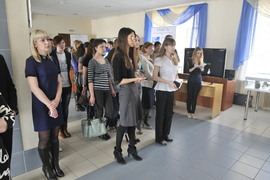
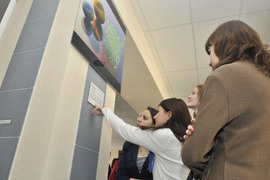
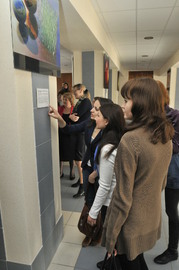
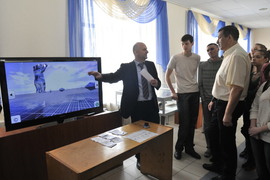
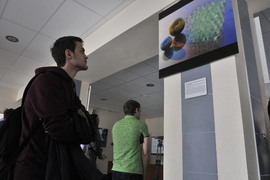
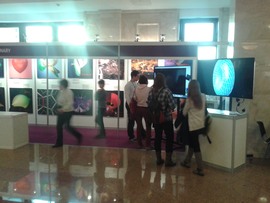
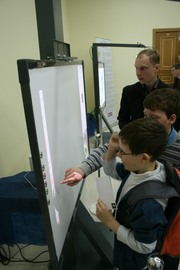
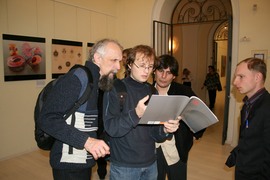
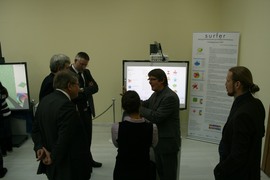
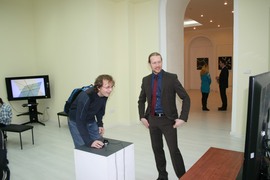
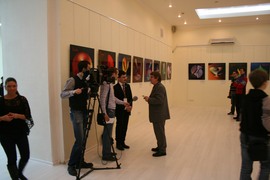
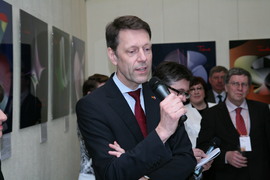
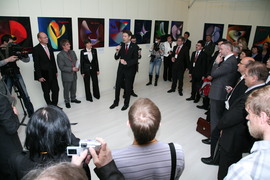
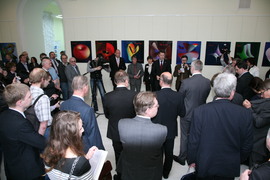
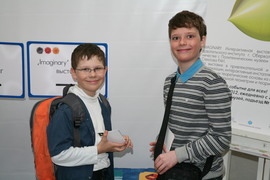
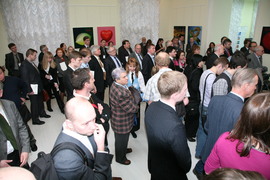
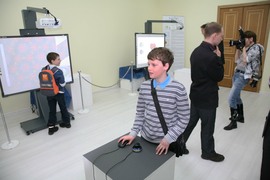
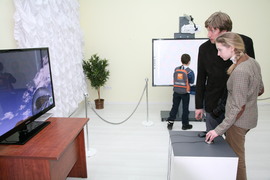
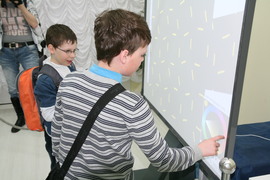
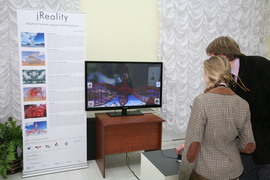
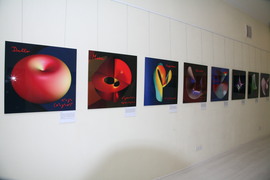
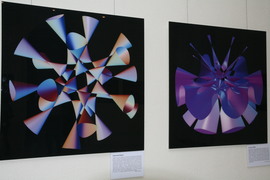
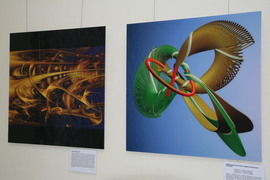
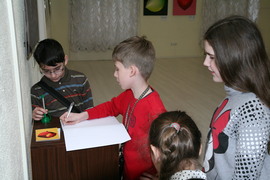
IMAGINARY in Yaroslavl


Time and Place: 
Perşembe, Kasım 22, 2012 - 00:00'den Cumartesi, Aralık 8, 2012 - 23:45'e kadar
Venue: 
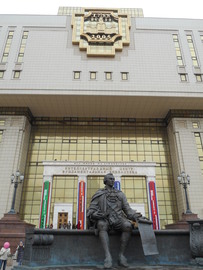
Demidow University
Jaroslawl
Russia
Coordinates: 
POINT (39.8844708 57.6260744)
Files: 
Image Collection: 
Embed External Video: 
Credits: 
German Embassy in Moscow
Demidov University Jaroslawl

Sayfalar